June and July Golf in the Algarve: A Golfing Secret

The crowds have gone. The mornings and evenings have not.

The Algarve’s peak golf season belongs to spring — April and May bring mild temperatures, green fairways, and full tee sheets. What follows in June and July is a different proposition entirely. Fewer golfers. Longer days. A pace that feels closer to what the region actually is, rather than what the calendar tells most visitors to expect.

The Early Tee Time Is Your Friend
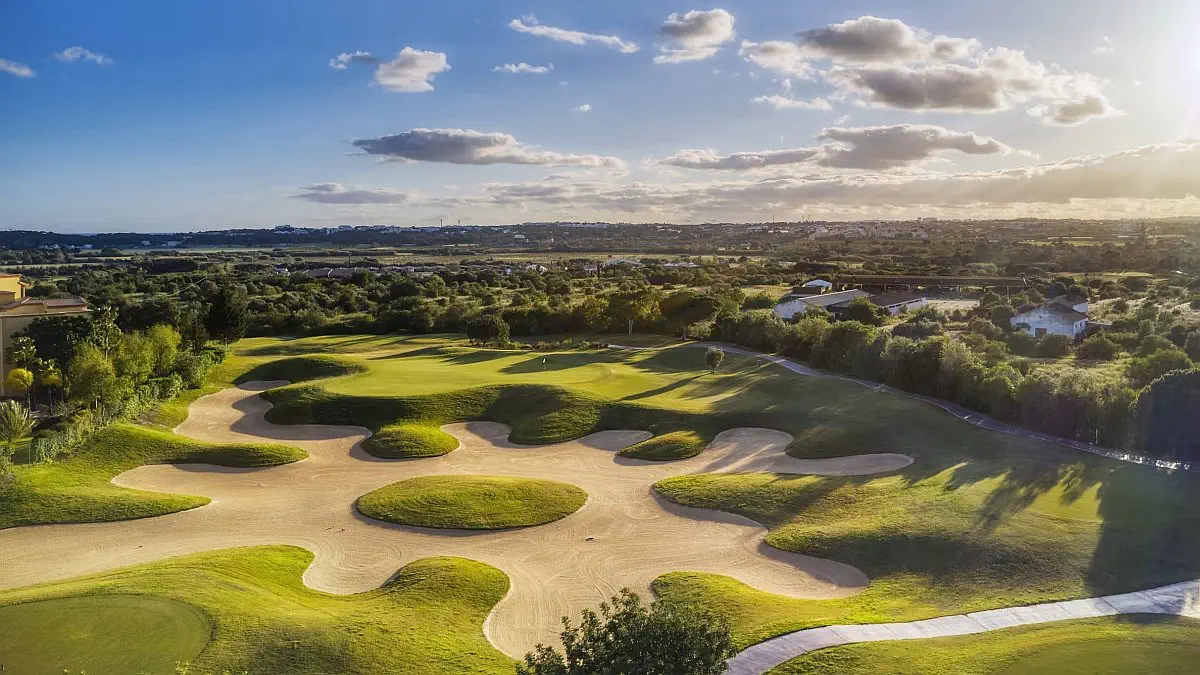
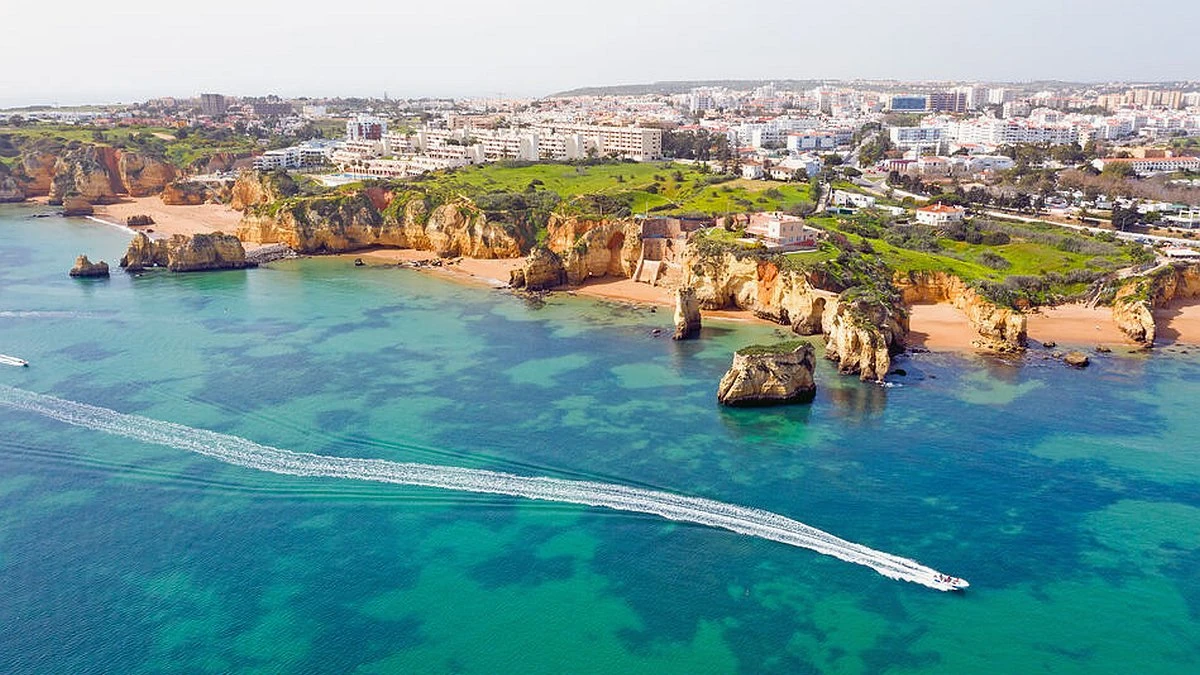
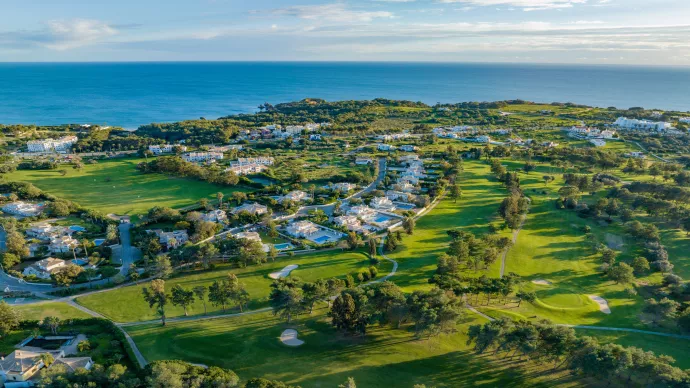
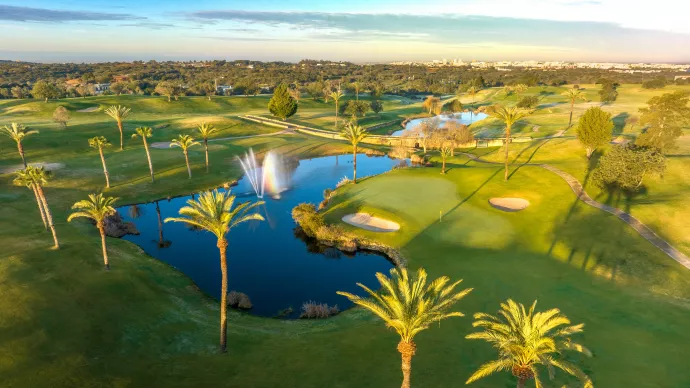
The Algarve coastline bathed in evening light during summer, Portugal
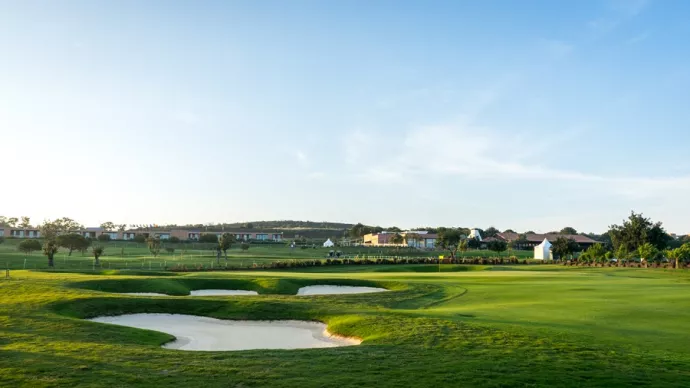
Summer in the Algarve means sunrise before 6:30am. An early tee time — 7am, or earlier at some courses — puts you on the fairway in conditions the midday golfer never sees. The light in those first hours is something particular: low and warm across the fairways, with a stillness to the air that belongs entirely to early morning. The cork oaks hold the shadow a little longer. The dew is still on the rough. By the time the sun is fully overhead, the round is done and the terrace is waiting.

The Long Evening Is an Underrated Asset

The Algarve in late June sees the sun set at around 9:15pm (timeanddate.com). That is not a minor detail. It means a back nine after dinner without the feeling of racing the clock. It means the kind of long, golden-hour light that does things to a links-style layout that a noon round cannot replicate. The western Algarve, in particular — where the Atlantic horizon sits just beyond the last fairway — earns that final hour of daylight more than most places. Summer evenings here are not a consolation. They are the whole point.

Green Fees in Summer: A Different Equation
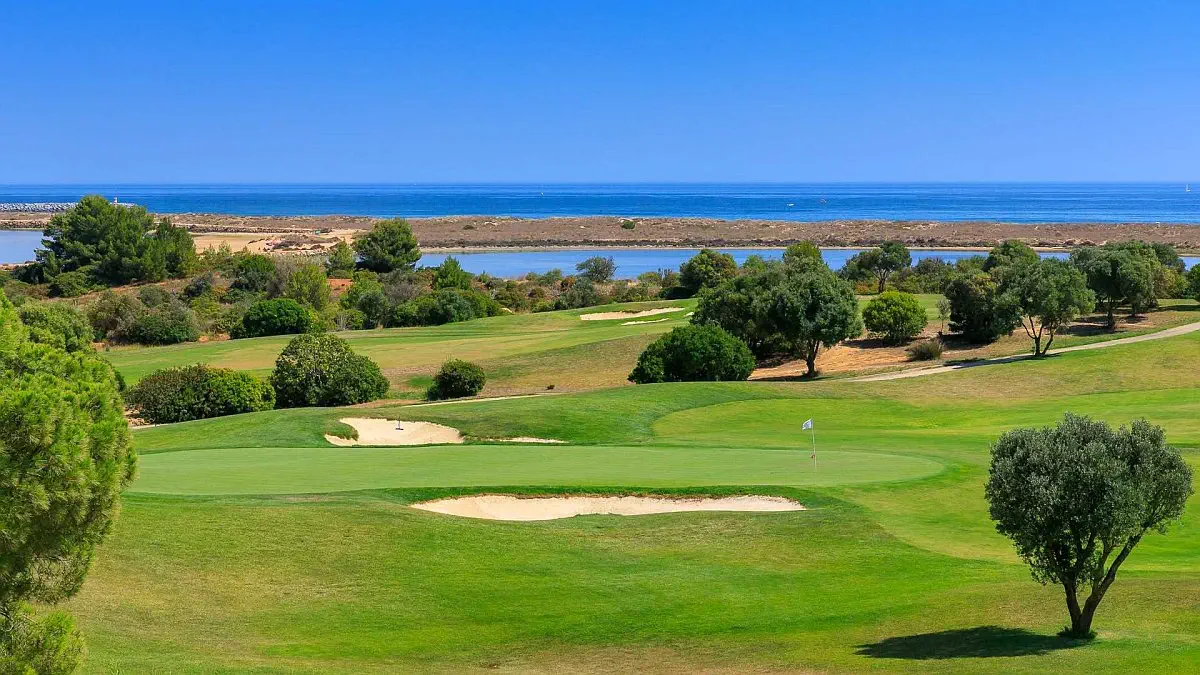
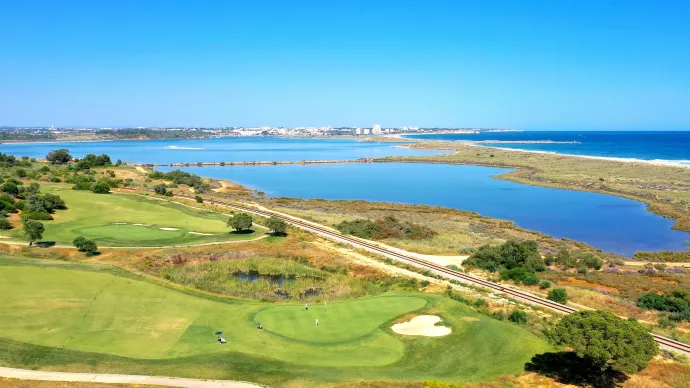
Palmares Golf Course overlooking Meia Praia bay and the Alvor estuary, Lagos, Algarve
Peak spring green fees at the region’s flagship courses can be significant. Summer rates — particularly in June, before the school holiday surge — offer considerably better value without a corresponding drop in course quality. The greens have been through a full season of careful preparation. The price is lower because demand is lower. That gap is wider than most golfers realise, and it is one of the better-kept secrets on the European golf travel calendar.

The Courses That Reward a Summer Visit

Not every course in the Algarve plays identically in summer. Layouts with Atlantic exposure — set above the western coastline, or at elevation — benefit from the prevailing coastal breeze throughout the morning hours. Palmares, rising above Lagos and the long sweep of Meia Praia bay, is one of those courses: the views across the Alvor estuary alone justify the drive west. Boavista — designed by Howard Swan and chronically underappreciated — sits on the same western stretch, its two distinct sections climbing and descending through landscaped valleys in a way that rewards patience and repeat visits. Further east, the umbrella pines of Vilamoura Old Course offer shade and quiet that the busier spring months rarely allow.

The Region in Summer
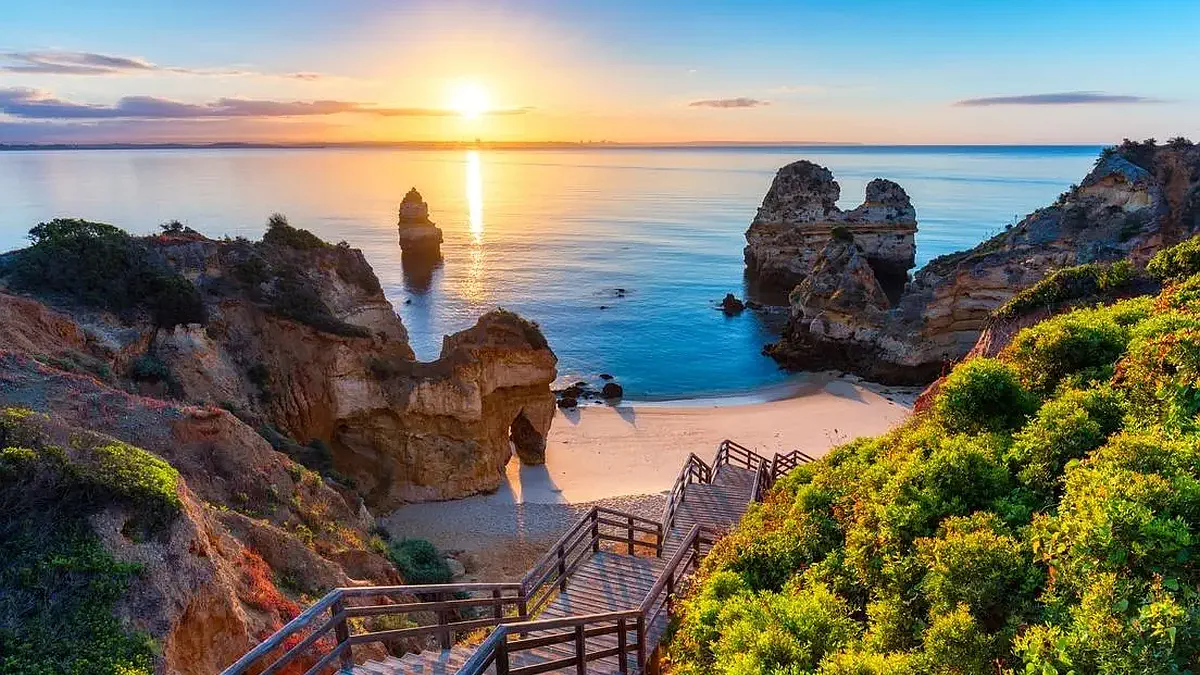
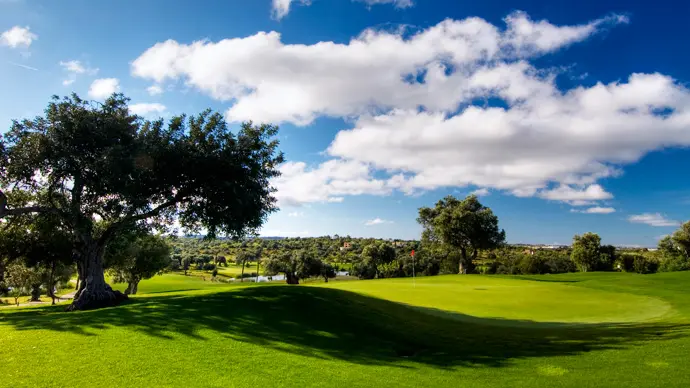
The Algarve coastline bathed in evening light during summer, Portugal
The Algarve does not slow down in summer so much as settle into itself. The limestone cliffs along the coast turn amber in the late afternoon light. The fishing boats sit low in Ferragudo harbour. The market stalls in Loulé carry the smell of fresh bread and dried herbs, and the restaurants fill gradually rather than all at once. Evenings stretch long enough to make dinner feel genuinely unhurried. A cold Sagres on a terrace facing west, with the light still in the sky at nine in the evening, is one of those small, specific pleasures that cannot really be argued with. Golf brings you here in June and July. The region is the reason you book again.

Browse our Algarve golf holidays and start planning your summer.


Vote for Tee Times

Golf in the Western Algarve: Why the Other Half of the Coast Deserves Your Attention

From Lagos to Carvoeiro, the courses west of the Golden Triangle are quieter, more varied, and consistently underestimated.

Most golfers booking a trip to the Algarve set their coordinates for the same stretch of coastline — Vilamoura, Quinta do Lago, Vale do Lobo. And it cannot be denied that these courses stand on their own as World-Class golf courses. The western half of the coast, however, runs its own game entirely, and has been doing so for a long time. And these courses deserve your attention.

Western Algarve Lagos

Lagos

Three courses sit in and around Lagos, each distinct enough to fill a week without repetition. Palmares is the most prominent — 27 holes redesigned by Robert Trent Jones Jr., combining parkland terrain with genuine links-style holes along the Meia Praia shoreline. The views across the Bay of Lagos from the upper sections are among the best you will find on any course in the country.

Designed by Howard Swan, the Boavista course does not receive the attention it deserves. Its two distinct sections climb to the highest point of the resort, before descending through landscaped valleys and water features to the clubhouse. The par-4 seventh, played against a backdrop of Atlantic and the Monchique hills, is worth the round on its own.

Espiche, the newest of the three, takes a softer approach — an undulating layout that works with the natural terrain rather than against it, and one that consistently rewards precision over power.

Palmares Golf Course, Lagos — 27-hole links-style layout with views over the Bay of Lagos, Western Algarve Boavista Golf Course, Lagos — Howard Swan design with Atlantic and Monchique hill views, Western Algarve Espiche Golf Course, Lagos — undulating layout set within the natural terrain of the Western Algarve
Portimão

Morgado presents the most generous setting in the area — a Seve Ballesteros design spread across a vast estate north of the city, with wide fairways, six par threes, and conditions that hold up impressively through the season. The scale of the property gives the round a sense of occasion that is difficult to find elsewhere in the western Algarve. Its neighbour, Álamos, is a par-71 layout with undulating fairways, well-placed bunkers, and steeply sloping greens that make the short game decisive. Views across the Monchique mountains and surrounding farmland make it worth seeking out, particularly for those spending longer in the area.

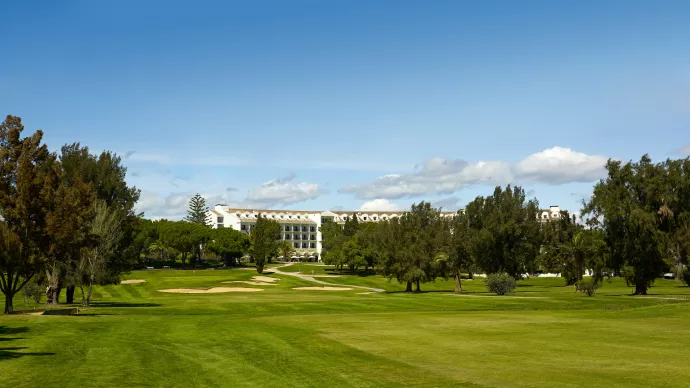
Penina needs no introduction to anyone who has followed golf in Portugal for more than five minutes. Sir Henry Cotton’s 1966 design — built on converted rice paddies — is the oldest course in the Algarve and hosted the Portuguese Open six times. It remains a flat, strategically demanding test that rewards course management over distance. The resort facilities are extensive. This is a base, not just a tee time.

Alto Golf offers a different proposition — elevated tees, sea views, and a layout that grows more demanding as the round develops. The par-5 sixteenth, with its substantial lake, has ended more than a few good cards.

Morgado Golf Course, Portimão — Seve Ballesteros design, Western Algarve Penina Championship Golf Course, Portimão — oldest course in the Algarve, designed by Sir Henry Cotton Alto Golf Course, Portimão — elevated tees and sea views, Western Algarve
Carvoeiro

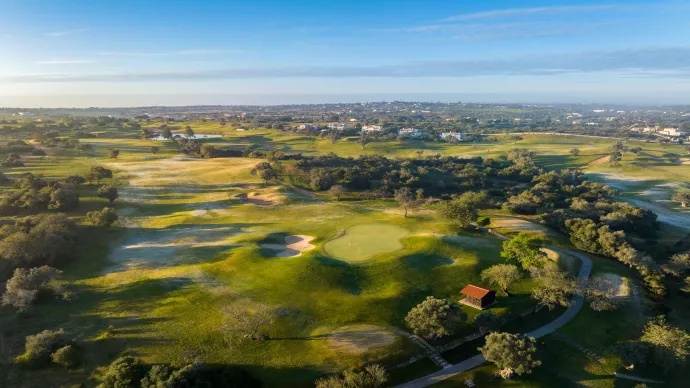
Vale da Pinta and its neighbour Gramacho form a natural two-course combination around Carvoeiro. Vale da Pinta is the more celebrated of the two — ancient olive trees, uneven lies, and an atmosphere that feels older than the game itself. Gramacho is the more accessible partner, redesigned from nine holes to eighteen, with almonds, olives, and carobs providing the backdrop.

Silves Golf, a few kilometres inland, adds a third option — orchards and farmland framing a layout that is gentler in character but no less enjoyable for it.

Vale da Pinta Golf Course, Carvoeiro — ancient olive trees and undulating fairways, Western Algarve Gramacho Golf Course, Carvoeiro — almond and olive tree backdrop, Western Algarve Silves Golf Course — orchards and farmland setting inland from Carvoeiro, Western Algarve
Worth Knowing

Faro Airport is around an hour from Lagos — a manageable drive either way, and one that is easily sorted with a pre-booked transfer. The western Algarve is quieter than its eastern counterpart, particularly outside the summer months, which makes it a better choice for golfers who prefer an unhurried pace on and off the course. Lagos and Portimão both have proper food scenes — seafood that takes itself seriously, restaurants that fill up for the right reasons.

East, Central or West, whatever your choice, browse our full selection of Algarve golf courses or explore golf holidays in the Algarve to start planning an unforgettable trip.


Double Glory at Vidago Palace — AQUAPOR Circuit Finds Its Round Three Champions

Luciana Reis’ 142-stroke aggregate topped every single competitor, while João Miguel Pereira is making a habit of winning.

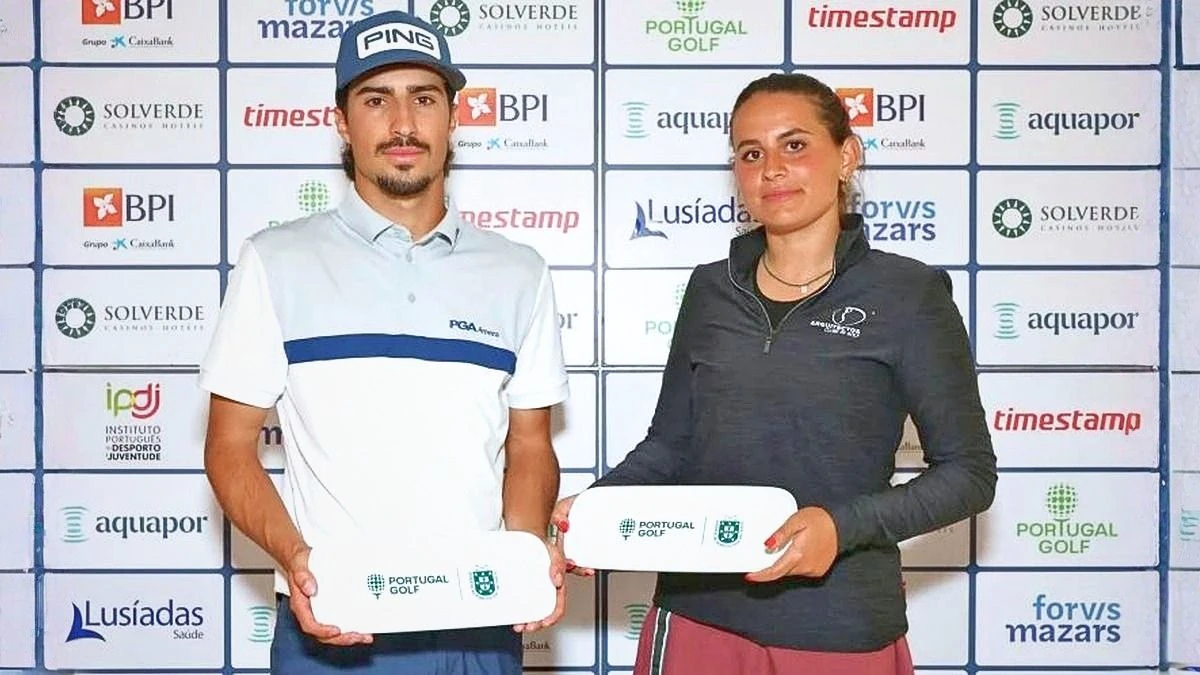
For a tournament hosting 73 golfers in the hills of northern Portugal, the 3rd AQUAPOR Circuit 2026 produced remarkably clear outcomes. At Vidago Palace on 16–17 May, Luciana Reis (Arquitectos) and João Miguel Pereira (Aroeira) claimed the titles in the Women’s and Men’s competitions respectively — and both had to earn them. (Federação Portuguesa de Golfe)

Aquapor 3rd Round Winners

Reis Sets the Standard for Everyone

Luciana Reis led after day one, returning a 70 (-2) featuring seven birdies, three bogeys, and a double bogey — a scoreboard that tells a story, not a fairytale. She closed with a composed 72 (par) on day two to finish at 142 (-2). Not just the best Women’s score. The best aggregate across all 73 competitors — fourteen women and 59 men. None of them scored lower. Francisca Rocha (Oporto Golf Club) took second in the Women’s category with 151 (+7), a margin that reflects just how controlled Reis was over two days. (FPG — Round 1 Report)

Pereira Holds Firm as the Field Slips

João Miguel Pereira entered day two level with Diogo Rocha (Oporto Golf Club), both having shot 71 (-1) on the opening round. Pereira’s second-round 74 (+2) wasn’t vintage form — but Rocha’s 79 (+7) made the arithmetic straightforward. Pereira won by a single stroke over João Maria Ivo de Carvalho (Estoril Golf Club), who closed with a tidy 71 to finish at 146 (+2). Rocha, so dangerous after day one, slipped to joint sixth. Golf, as ever, reserves the right to change the conversation overnight. (Federação Portuguesa de Golfe)

The Venue: Vidago Palace

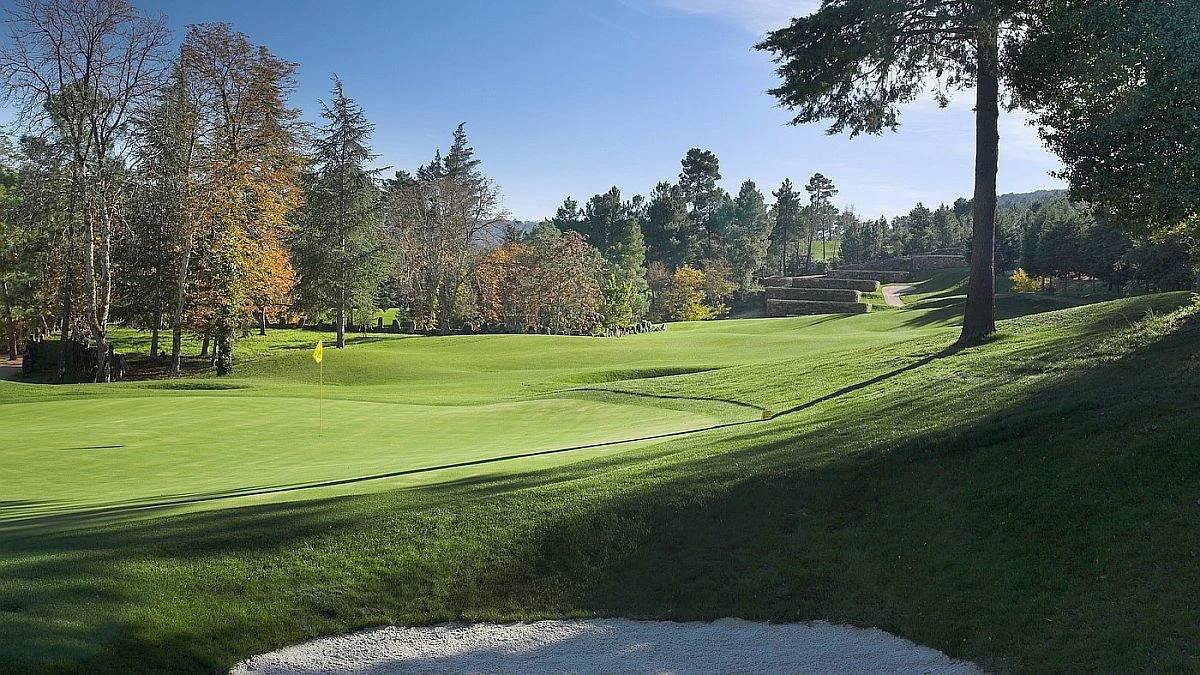
Vidago Palace Golf Course

Vidago Palace is no ordinary backdrop for a national circuit event. Originally laid out by Scottish architect Mackenzie Ross in 1936 as a nine-hole course, it was reimagined by Cameron & Powell and reopened as a full par-72 championship layout in 2010. Set in the Oura Valley in northern Portugal — roughly an hour south of Chaves, near the Spanish border — the course winds through a centenary park before opening out into dramatic hillside terrain. The 17th, a par five played from the highest to the lowest point on the course, is the signature hole and one of the more theatrical finishes in Portuguese golf. The clubhouse was designed by architect Álvaro Siza Vieira. (Vidago Palace)

A Season Taking Shape

Three events into the 2026 AQUAPOR Circuit, and Pereira already has two wins — a fact the rest of the field will be tracking with increasing attention. The circuit opened in January at Morgado do Reguengo, where Amélia Gabin (ADCQL) and José Miguel Franco de Sousa (Estoril Golf Club) took the honours. March brought Quinta do Perú and a first circuit win for Pereira alongside Francisca Salgado (Vale de Janelas). Vidago makes it a double for the Aroeira golfer in 2026. Five champions across three events; five different stories.

What’s Next on the Circuit

The AQUAPOR Circuit resumes at Palmares on 18–19 July — a course that trades northern mountain drama for Algarve coastline, with the beach at Meia Praia stretching out below its fairways. Estela follows in October, and the season concludes at Belas Clube de Campo in November.

If the circuit’s next stop has you thinking about a Portugal golf trip of your own, explore the Algarve’s finest courses — including Palmares — with Tee Times.