Tee Times Golf Holidays Nominated for Europe’s Best Golf Tour Operator 2026

Tee Times Golf Holidays has once again been nominated for the prestigious Europe’s Best Golf Tour Operator 2026 award at the World Golf Awards, one of the most respected and recognised accolades in the international golf tourism industry.

A Record of Recognition

This nomination marks another important milestone in a journey that has seen Tee Times establish itself as one of the leading names in golf travel. Over the years, the company has received multiple World Golf Awards distinctions, including Portugal’s Best Inbound Golf Tour Operator, Portugal’s Best Outbound Golf Tour Operator, and Europe’s Best Golf Tour Operator, reflecting its long-standing commitment to excellence and customer satisfaction.

From Vilamoura to the Wider World

Founded in Vilamoura in 1993, Tee Times Golf Holidays has grown alongside the Algarve’s rise as one of Europe’s premier golf destinations. What began as a small local business has evolved into an internationally recognised golf tour operator, helping thousands of golfers enjoy unforgettable golf experiences every year.

Portugal, Spain and Beyond

Today, Tee Times offers one of the most comprehensive golf holiday portfolios in the market, with programmes available throughout Portugal and Spain, from the Algarve, Lisbon and Porto to the Costa del Sol, Costa Blanca, Madrid, the Balearic Islands and the Canary Islands. In addition, the company has expanded its offering to include a selection of renowned international golf destinations, giving clients access to some of the finest golf courses and resorts around the world.

Built on Partnership and Trust

Over more than three decades, Tee Times has built strong relationships with golf courses, hotels and tourism partners, earning a reputation for expertise, reliability and exceptional service. The company currently handles around 120,000 rounds of golf annually, a reflection of both the scale of its operation and the trust placed in it by golfers worldwide.

The nomination for Europe’s Best Golf Tour Operator 2026 is a recognition not only of the work and dedication of the Tee Times team, but also of the confidence shown by the thousands of clients who choose the company to organise their golf holidays year after year.

How to Cast Your Vote

Voting for the World Golf Awards 2026 is now open and is available to both industry professionals and golf travellers.

If you have travelled with Tee Times Golf Holidays, booked a golf holiday through our team, or simply followed our journey over the years, we would be delighted to receive your support.

Vote for Tee Times Golf Holidays as Europe’s Best Golf Tour Operator 2026

👉 Vote here:

Vote for Tee Times Golf Holidays as Europe's Best Golf Tour Operator 2026 at the World Golf Awards

Every vote is a recognition of more than 30 years of dedication to golf tourism, the trust of our clients, and the strong partnerships we have built along the way. Your support can help us continue to strengthen Tee Times Golf Holidays’ position among Europe’s leading golf tour operators.

Thank you for your trust and support.
Should You Bring Your Own Clubs on a Golf Holiday? The Case For and Against

What frequent flyer perks, damage statistics, and one snapped driver shaft can teach you about packing for a Golfing Getaway.

Every serious golfer has had the debate at some point before a trip: pack the clubs, or hire on arrival. It sounds like a small decision. It rarely is. Get it wrong and it can mean an extra hour at the baggage carousel, a damaged driver, or simply irons that never quite feel like yours. Here is what actually weighs on each side of the argument.

The Case for Bringing Your Own Set

There is no substitute for clubs you know. Your own irons carry the exact lie angle, shaft flex and grip wear that your swing has adapted to over years, and no rental set — however well maintained — replicates that. For golfers with a single-digit handicap, or anyone who has recently been fitted, the performance gap between “mine” and “borrowed” is not trivial. It shows up in distance control and, more than anywhere, around the greens.


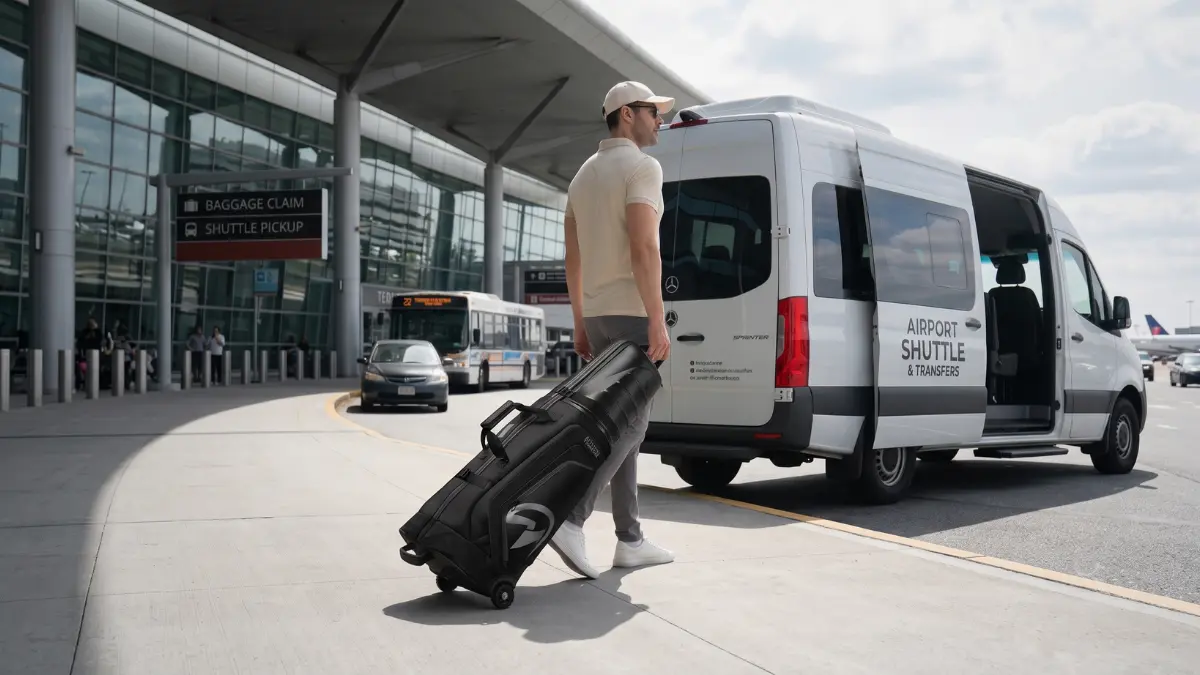
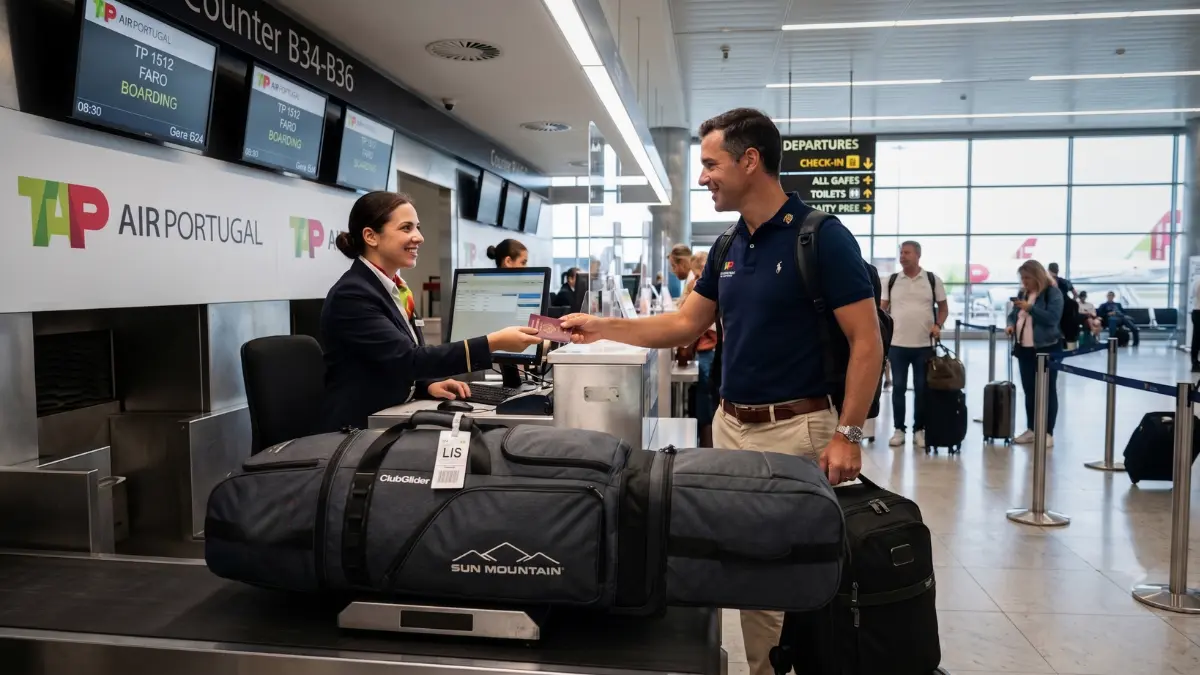
Golfer checking in a golf travel bag at airport departures before a golf holiday

What It Actually Costs to Fly With Them

The honest answer is: more than most golfers expect, and not just in euros. TAP Air Portugal treats golf bags as special sports baggage, with fees typically running from around €45 to over €100 depending on route and season, and registration required at least 24 hours before departure . Budget carriers popular for short Algarve or Costa del Sol hops are no kinder — easyJet charges roughly £15 per 3kg increment above a 20kg allowance, on top of its own booking fee for the bag itself . Add the return leg, and a couple travelling with two sets can be looking at well over €200 in fees alone before a single green fee is paid. (Baggage Policies) ; (Greencard Golf)

The Risk Nobody Budgets For

Then there is the handling itself. Industry travel-insurance data puts golf club damage at around 1.2% of checked-bag journeys — a figure that drops below 0.1% with a proper hard case, which says a great deal about how soft-sided bags fare in an aircraft hold . Delayed or misrouted bags are a separate headache entirely: airlines classify a bag as officially lost only after searching for it, sometimes for up to 21 days on international routes, which is considerably longer than most golf trips last. A set that does not arrive on day one rarely arrives in time to matter.(Travel Arbitrage)


Golf clubs packed in a hard travel case with foam padding

Making the Call

For a golfer who plays one set of clubs, knows every millimetre of it, and is flying direct with a generous baggage allowance, bringing your own remains the better option — the performance benefit outweighs the fee and the modest risk. For anyone connecting through multiple airports, flying a budget carrier with tight weight limits, or simply travelling light, the arithmetic tips the other way. Hiring removes the fee, the risk, and the queue at oversized baggage — the trade-off is playing an unfamiliar set for the week.


Rental golf clubs ready for collection at a golf course pro shop in Portugal

Tee Times Golf Holidays offers golf club rental across its portfolio of courses in Portugal and Spain, from major brands delivered directly to the hotel or first tee — a straightforward way to sidestep the whole debate for a shorter trip.


Vote for Tee Times

The Canary Islands: Spain’s Year-Round Golfing Secret

No peak season to dodge, no off-season to wait out, just the same welcoming weather window, twelve months running.

Most Spanish golf destinations are a trade-off. Book the Costa del Sol in August and you’re playing through serious heat; book it in January and you’re reaching for a jacket between holes. The whole calendar becomes a negotiation.

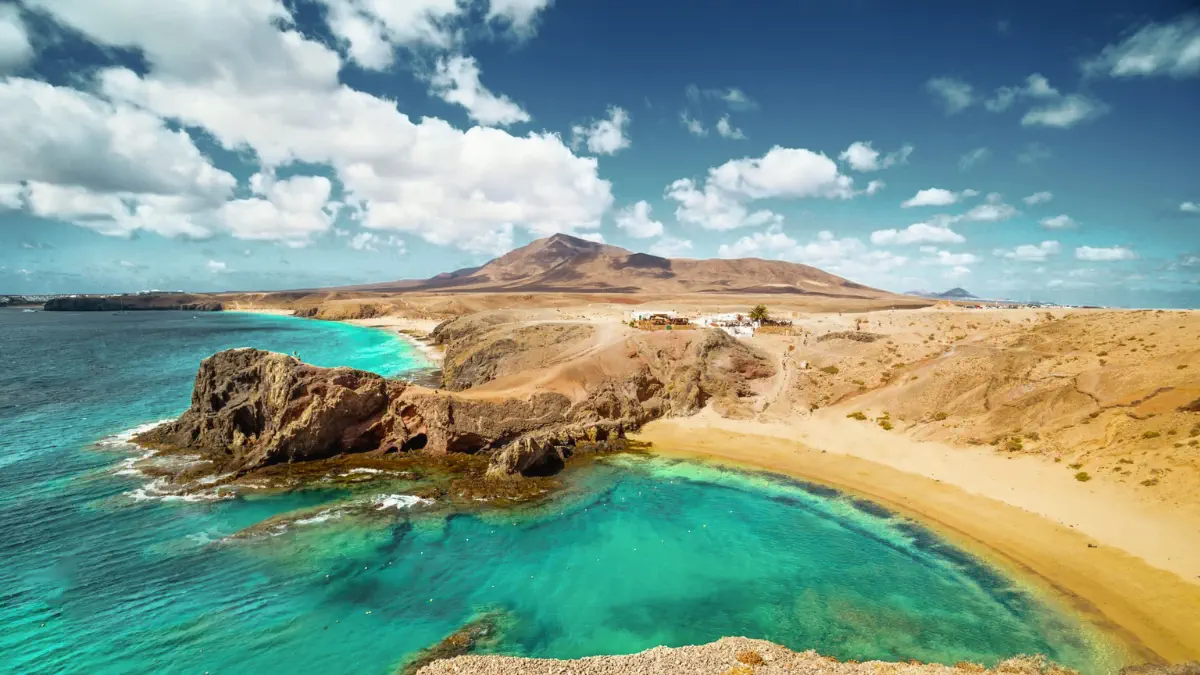
Emerald coastline in the Canary Islands

Four hundred kilometres south, off the coast of Morocco, the Canary Islands quietly opt out of that negotiation altogether. The trade winds and the cool Canary Current flatten the curve almost entirely — there’s no brutal summer to avoid and no proper winter to wait out, just a single, remarkably narrow temperature band that holds steady whichever month the flight happens to land in.

The numbers that matter

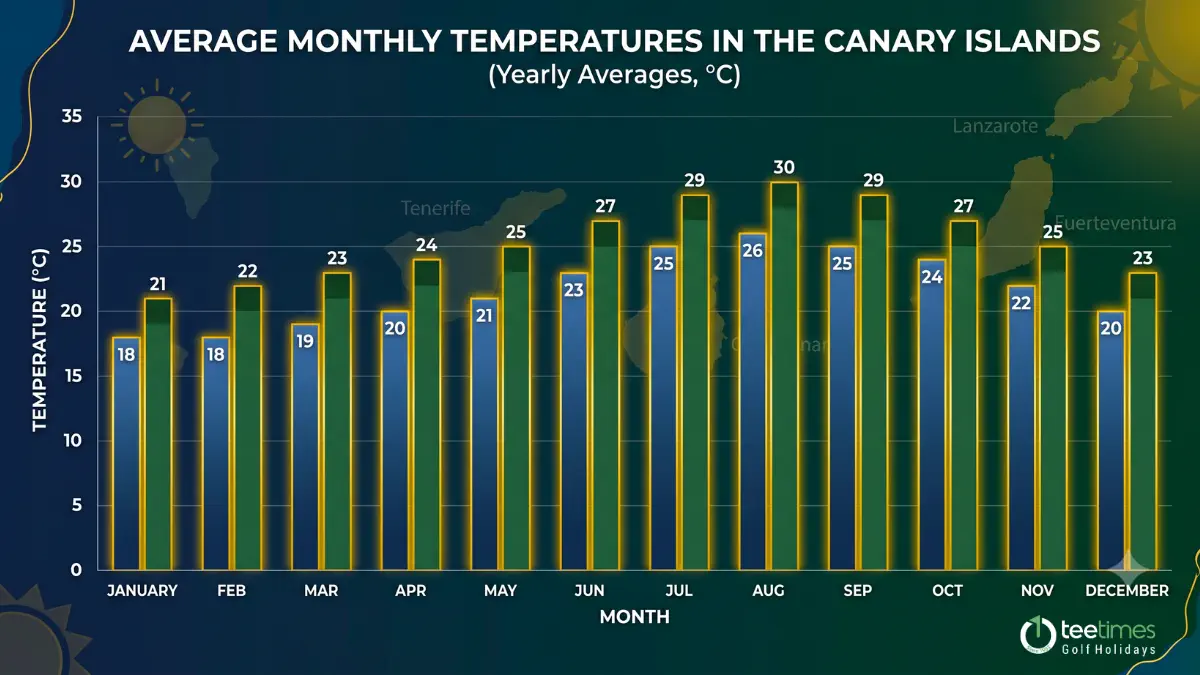
This isn’t a marginal difference, and it isn’t only a winter story. Tenerife and Gran Canaria sit around 20-21°C through January, mild enough that the sea stays swimmable through the coldest part of the year. Roll forward to August — peak Mediterranean heat everywhere else in Spain — and the islands only climb to around 24-29°C, kept in check by the same trade winds and current.

Monthly averages of the Canary Islands

Compare that with Málaga, where January highs average 14-17°C and August highs push past 33°C. The mainland Costas swing through a 20-degree range across the year. The Canaries barely move 7 or 8 degrees in either direction. For a golfer, that means the calendar stops being a variable — any month works, and the round at hand never has to be rescheduled around the heat or the cold. (Guide to Canary Islands)

Volcanic architecture, not Mediterranean cliché

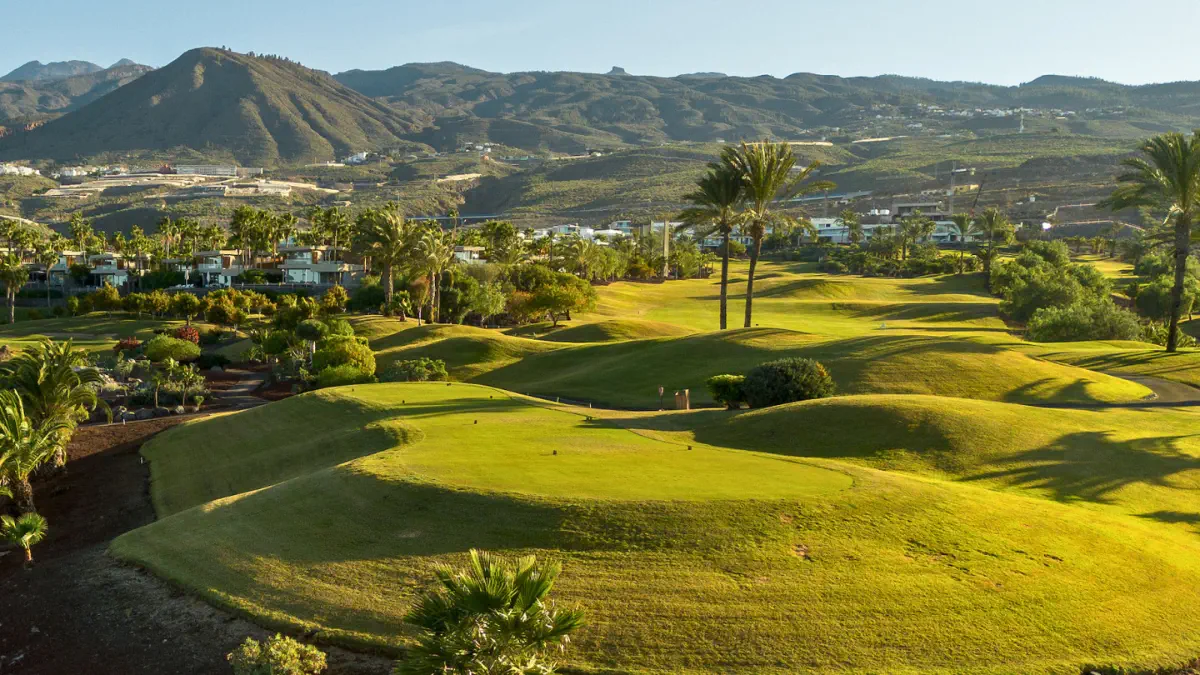
The other thing the Canaries offer that the mainland Costas can’t replicate is the terrain itself. These are young volcanic islands, and the courses built on them tend to show it. Abama in Tenerife sits carved into a ravine on the island’s northwest tip, framed by banana plantations and the silhouette of Mount Teide — Spain’s highest peak — looming behind it.

Abama Golf Course Tenerife

Anfi Tauro in Gran Canaria threads through a steep inland valley with elevation changes that owe more to Arizona desert golf than anything coastal Spain usually offers.Lanzarote takes this further still. The Lanzarote Golf Course and the more compact Costa Teguise sit on an island whose entire landscape was shaped by eruptions as recent as the 1730s — black volcanic soil, lunar ridgelines, a backdrop that looks nothing like the rest of Spain because, geologically, it isn’t.

Tenerife: altitude and ocean in the same round

Tenerife’s golf benefits from genuine variety, helped along by an island that rises from sea level to nearly 3,700 metres inside a few dozen kilometres. Real Club de Tenerife, founded in the early twentieth century, remains one of the most established clubs in the Canaries.

Real Golf Club in Tenerife

Further south, Amarilla Golf & Country Club plays along volcanic cliffs above the Atlantic, with several holes running close enough to the water that the swing thoughts compete with the view.

Gran Canaria: a continent in miniature

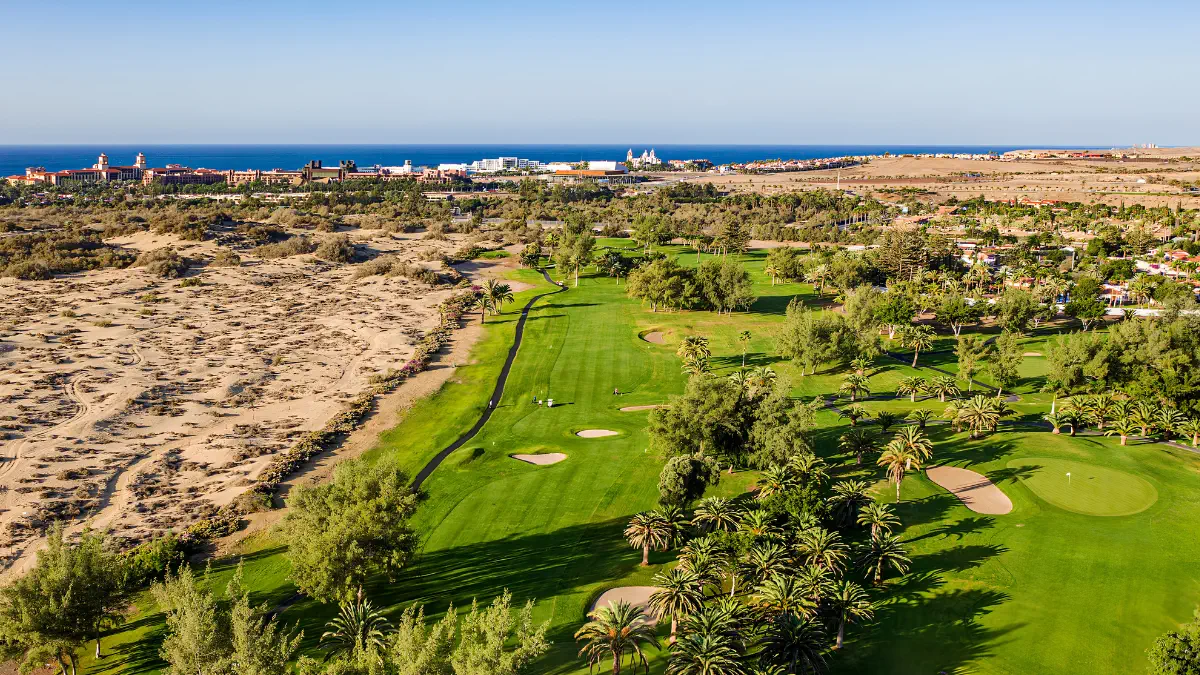
Gran Canaria is sometimes called a miniature continent, and the golf reflects that range. Maspalomas Golf Course runs along the edge of the island’s famous dunes — a links-style test with the Sahara-like sand dunes as a backdrop rather than the usual sea grass.

Maspalomas Golf Course, Sand Dunes aand Green Fairways

Real Club de Golf Las Palmas, meanwhile, is the oldest golf club in Spain, founded in 1891, and sits inside the rim of an extinct volcanic crater at Bandama — a setting that’s difficult to find anywhere else in Europe.

Where the rounds end the day

None of this matters much if the rest of the trip doesn’t hold up, and it does. The southern resorts on Tenerife and Gran Canaria are built for exactly this kind of break — proper hotels, good spas, and restaurants that take the local seafood seriously. Canarian cuisine has its own identity, distinct from the mainland: papas arrugadas with mojo sauce, fresh vieja parrotfish, and a wine scene shaped by volcanic soil that produces something genuinely unusual in the glass.

The golf, the climate, and the landscape all point the same direction: this is a destination that doesn’t ask the golfer to pick a season. There’s no “best time to go” caveat to factor in, no shoulder months to chase — just a calendar that stays playable from the first week of January to the last week of December.

Browse Canary Islands golf holidays and pick the month that suits you — not the one the weather dictates.


Vote for Tee Times