Costa Navarino: A Visitor’s Guide for Golfers and Their Families

Greece, Four Championship Courses, One Aqua Park, and a Lot of Olive Groves in Between

Costa Navarino occupies a rare position in European golf. It is a destination built to satisfy the single-minded golfer and the family holidaymaker in the same fortnight, without either group feeling like an afterthought. Set on the southwest tip of the Peloponnese in the region of Messiniai in Greece, it pairs four championship courses with two resort hotels engineered for exactly this kind of dual-purpose trip. For Tee Times Golf Holidays clients weighing up whether this is the right destination for a mixed group, here is what to expect.

The Golf

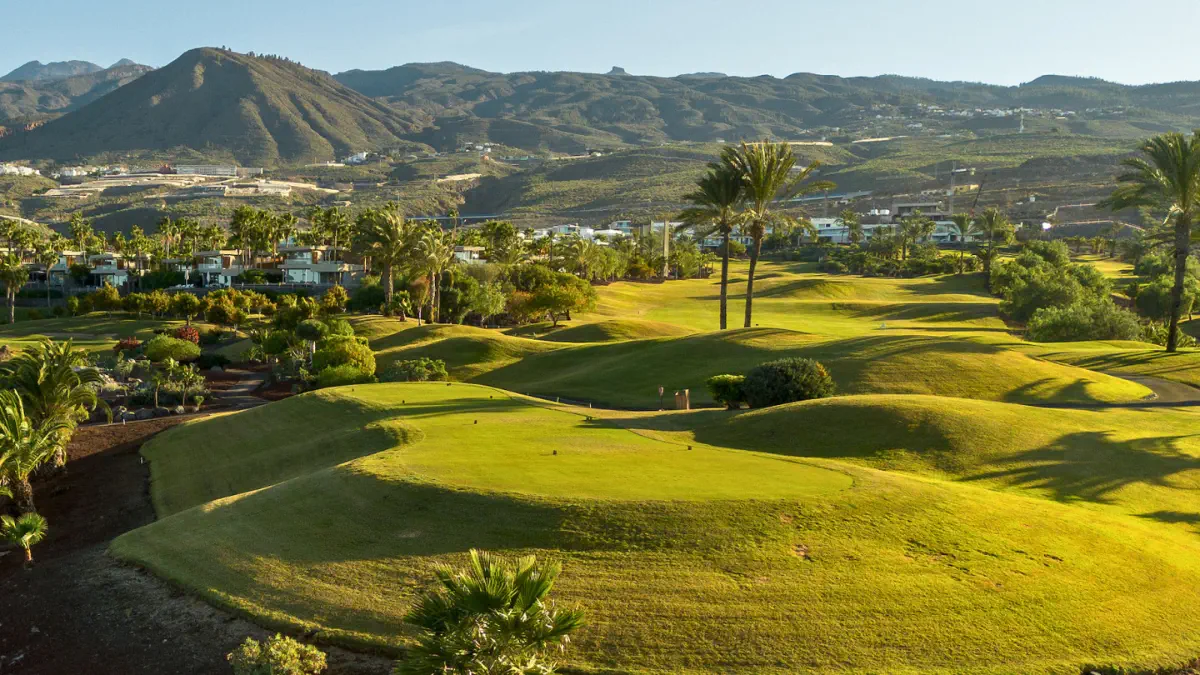
Costa Navarino’s golf offer is built around four courses, each with a distinct identity. The Dunes Course, designed by Robert Trent Jones II, was the first championship layout in Greece and remains the resort’s signature round, weaving between olive groves and the coastline with sea views from several holes. The Bay Course, a Bernhard Langer design, sits closer to the water and rewards precision over power.
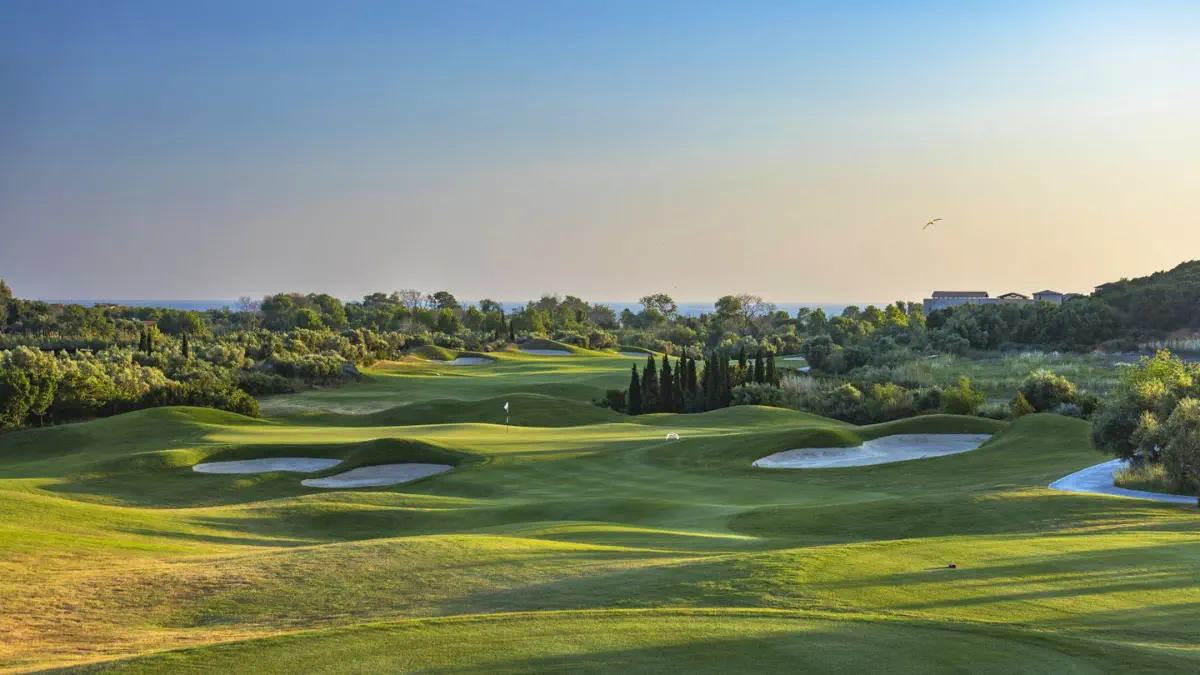
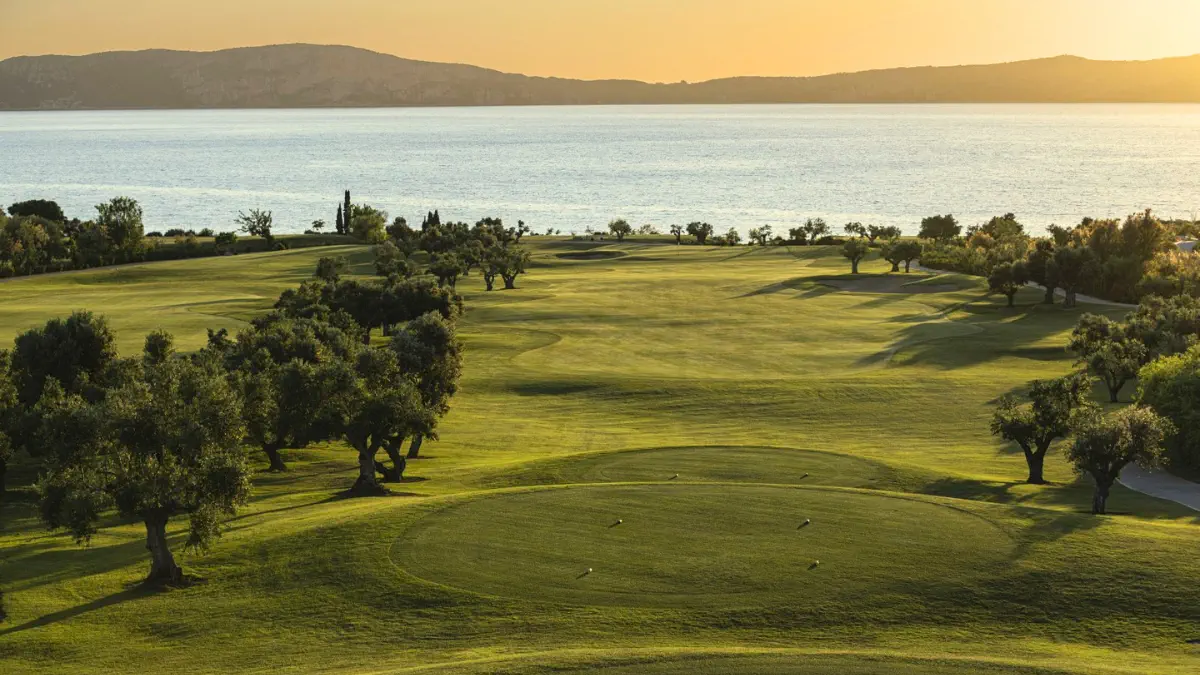
Costa Navarino, Dunes Golf Course, 17th hole
1st hole of the Costa Navarino, Dunes Golf Course

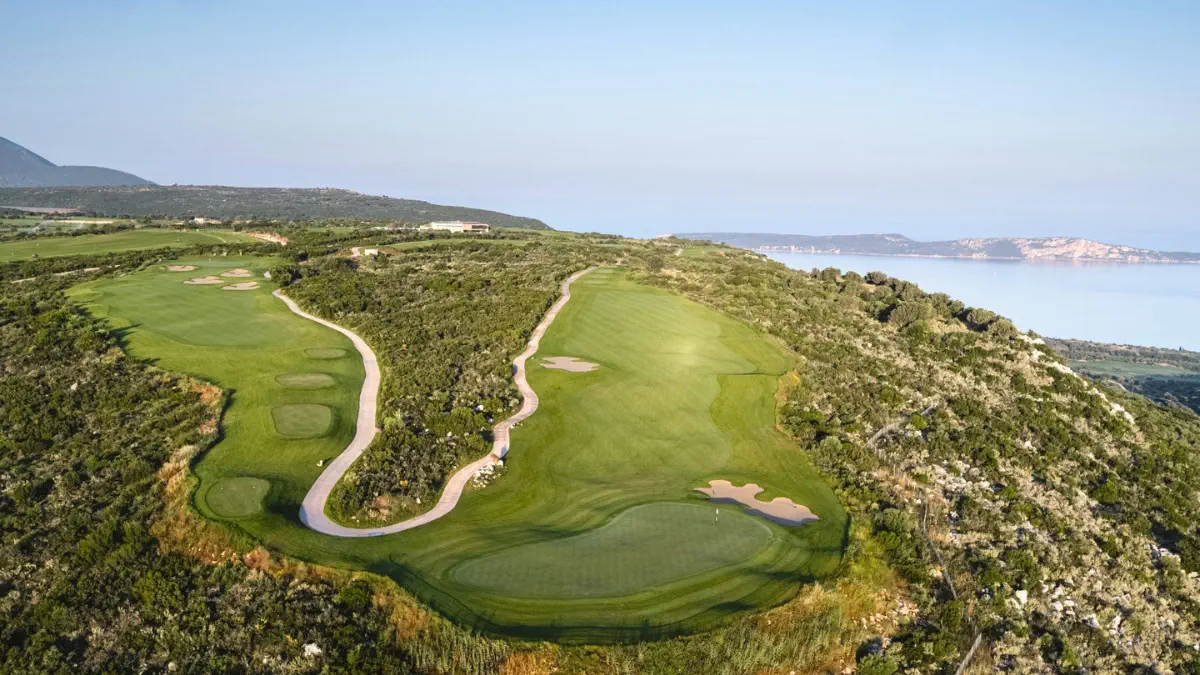
Further inland, the Hills Course climbs into more dramatic terrain, with elevation changes that open up long views back toward the Ionian Sea — both Hills and the fourth course were shaped by José María Olazábal. Rounding out the portfolio is the International Olympic Academy Golf Course, a shorter and more relaxed track well suited to mixed-ability groups or a lighter round between family commitments.
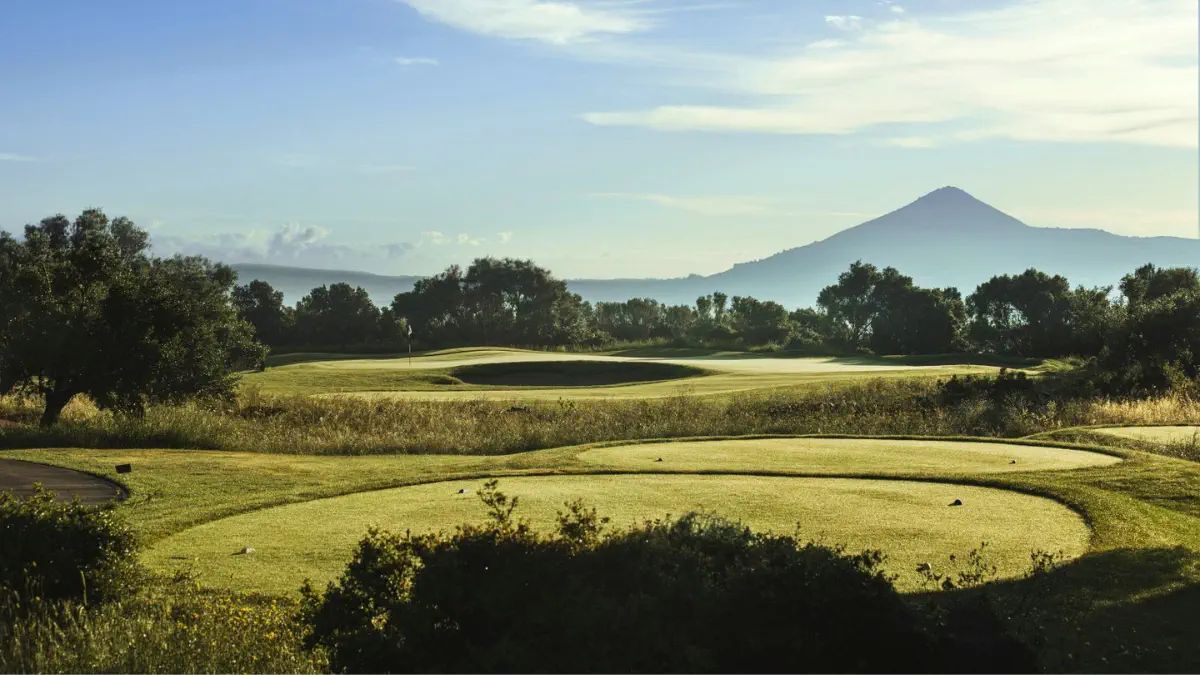
Costa Navarino, Hills Golf Course
Dramatic 13th and 14th Holes at the Olymipc course, Costa Navarino

Four courses across one resort means golfers can vary the test daily without changing hotels or driving distances. It also means non-golfing family members are never more than a few minutes from wherever the group happens to be playing.

Where to Stay

Two resorts anchor Costa Navarino, and which one suits a group often comes down to who’s travelling. The Westin Resort Costa Navarino is where the family infrastructure lives — the Aqua Park’s three waterslides and play pool sit a short walk from the beach, and two dedicated kids’ clubs cover the full age range, Cocoon for toddlers from four months to three years and Sandcastle for children aged four to twelve, with a separate youth hub for teenagers. Golf and tennis lessons are available for children too, so a mixed-age group genuinely has somewhere for everyone each morning.
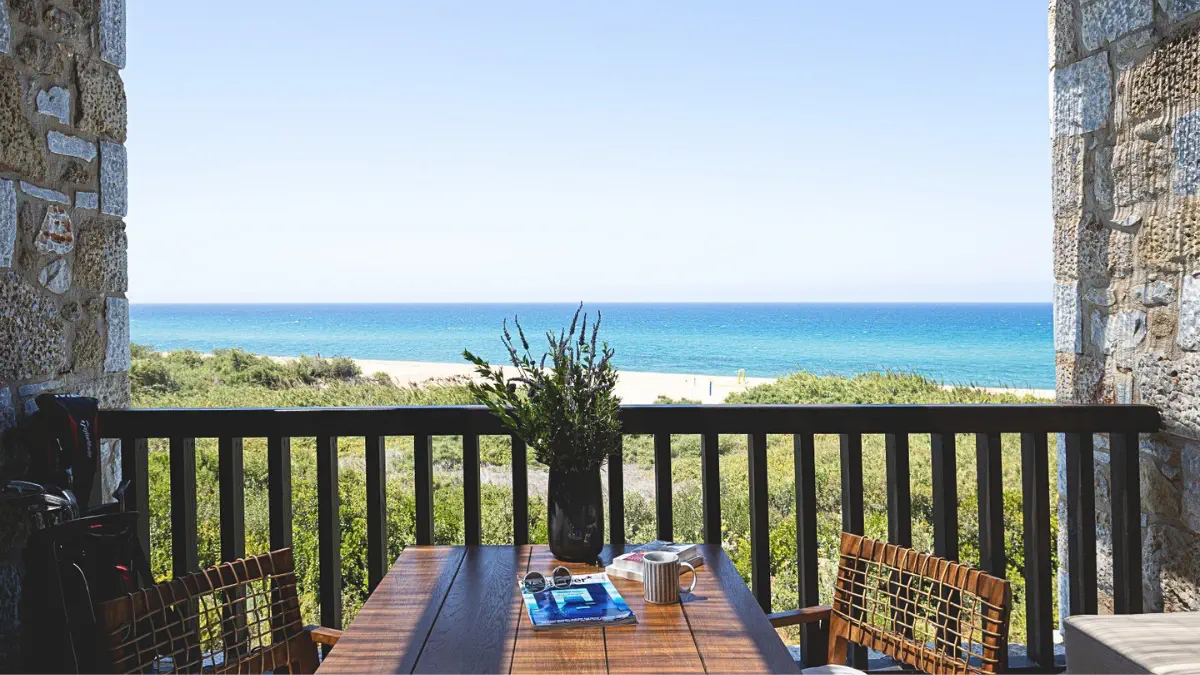
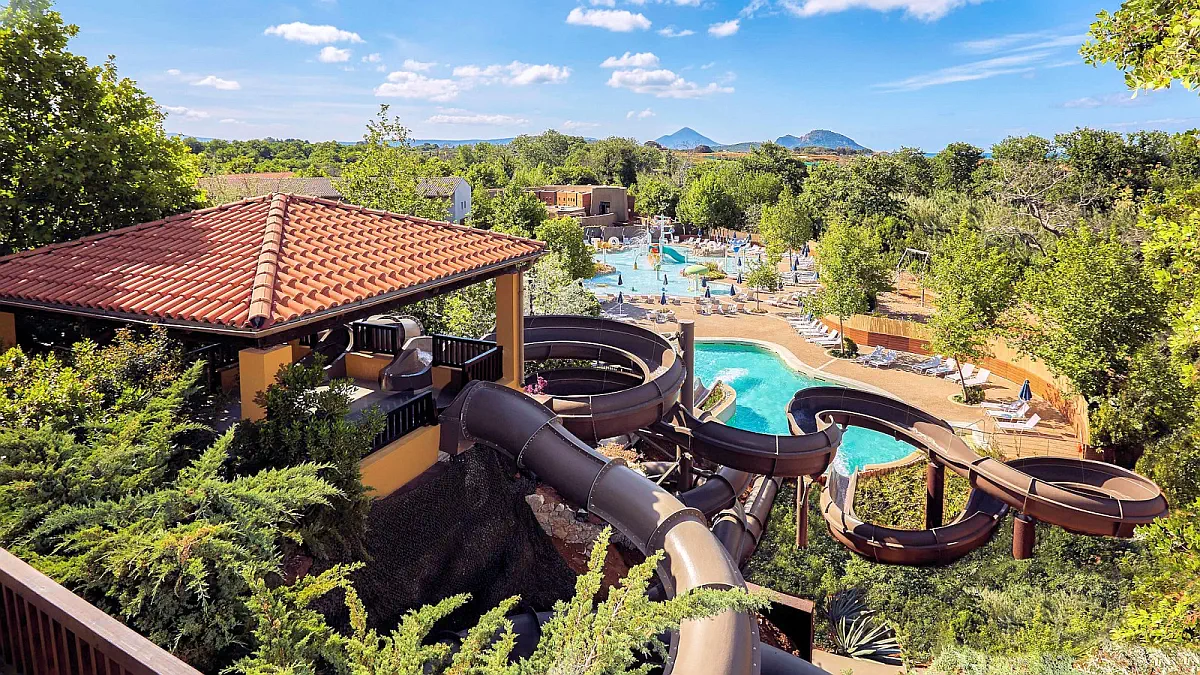
The sea within a stones throw, Westin Resort Costa NavarinoThe sea within a stones throw, Westin Resort Costa Navarino

The Romanos, a Luxury Collection Resort sits next door and pitches itself a register higher, with private infinity pools in most ground-floor rooms, beachfront villas, and 24-hour butler service for suite guests. It leans toward couples and golfers seeking a quieter, more polished stay, though children are welcome and can still use the Westin’s kids’ clubs and Aqua Park just along the beach. For a group split between serious golfers wanting five-star quiet and a family wanting full facilities, staying at each property has its own logic — worth discussing with your Tee Times contact when you book.
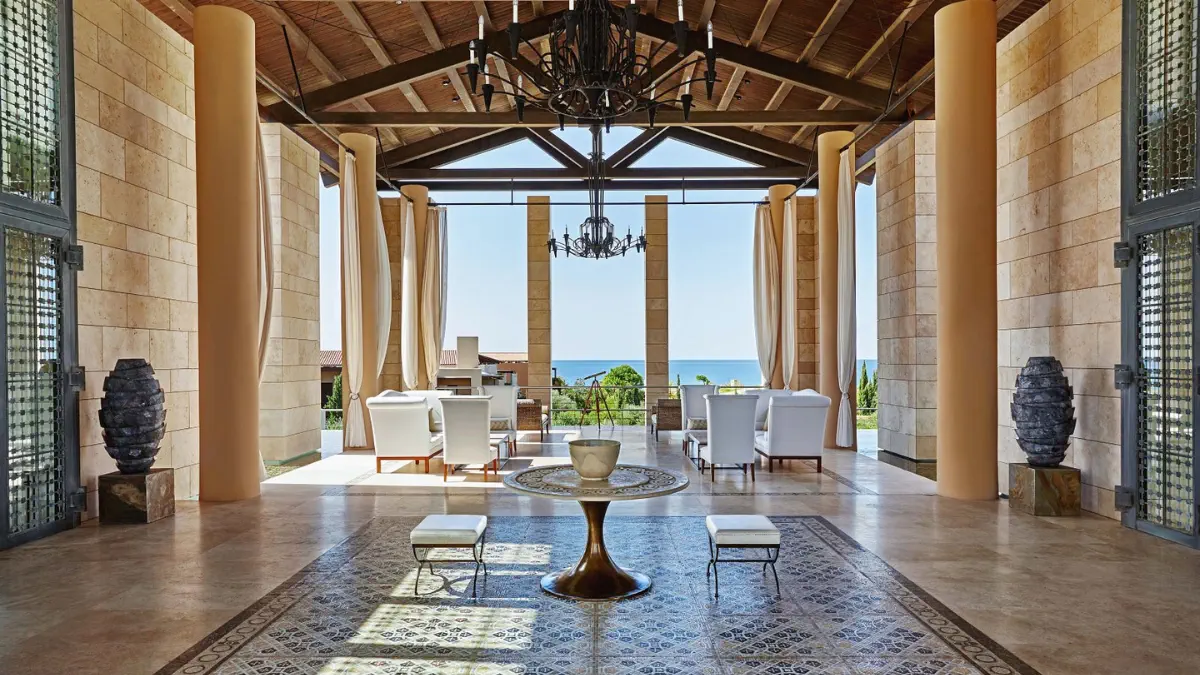
The sea within a stones throw, Westin Resort Costa Navarino

Beyond the resort’s own facilities, Messinia rewards a family willing to leave the grounds for an afternoon. The medieval fortress at Methoni sits a short drive away, and snorkelling excursions along this stretch of the Ionian coast occasionally turn up sightings of the loggerhead sea turtle, a species that nests locally. It is the kind of destination where the non-golfers in the group return from their own day out with just as much to talk about over dinner.

Dining and Downtime

Messinia has long been considered one of the most fertile corners of Greece, and the resort’s kitchens make the most of it — olive oil, in particular, is treated here with the same reverence Tee Times clients in Portugal reserve for fresh dourada. Between rounds, the Anazoe Spa offers oleotherapy treatments built around that same local olive oil, a detail that sums up the resort’s approach: everything, from the golf to the spa menu, is rooted in where it actually is.

For Tee Times Golf Holidays clients considering Costa Navarino, the appeal is straightforward. It is one of the few destinations in Europe where a serious golfer and a family in search of a proper holiday can book the same trip and both come home satisfied. Browse Costa Navarino golf holidays and start planning.

Vote for Tee Times

The Canary Islands: Spain’s Year-Round Golfing Secret

No peak season to dodge, no off-season to wait out, just the same welcoming weather window, twelve months running.

Most Spanish golf destinations are a trade-off. Book the Costa del Sol in August and you’re playing through serious heat; book it in January and you’re reaching for a jacket between holes. The whole calendar becomes a negotiation.

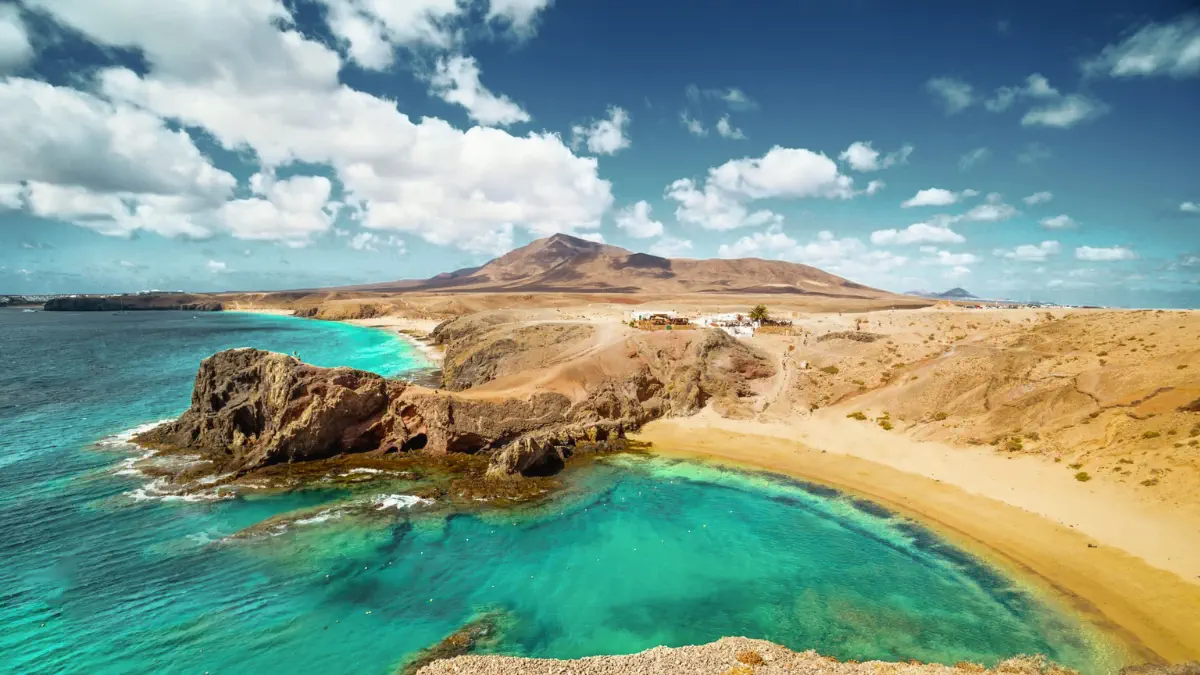
Emerald coastline in the Canary Islands

Four hundred kilometres south, off the coast of Morocco, the Canary Islands quietly opt out of that negotiation altogether. The trade winds and the cool Canary Current flatten the curve almost entirely — there’s no brutal summer to avoid and no proper winter to wait out, just a single, remarkably narrow temperature band that holds steady whichever month the flight happens to land in.

The numbers that matter

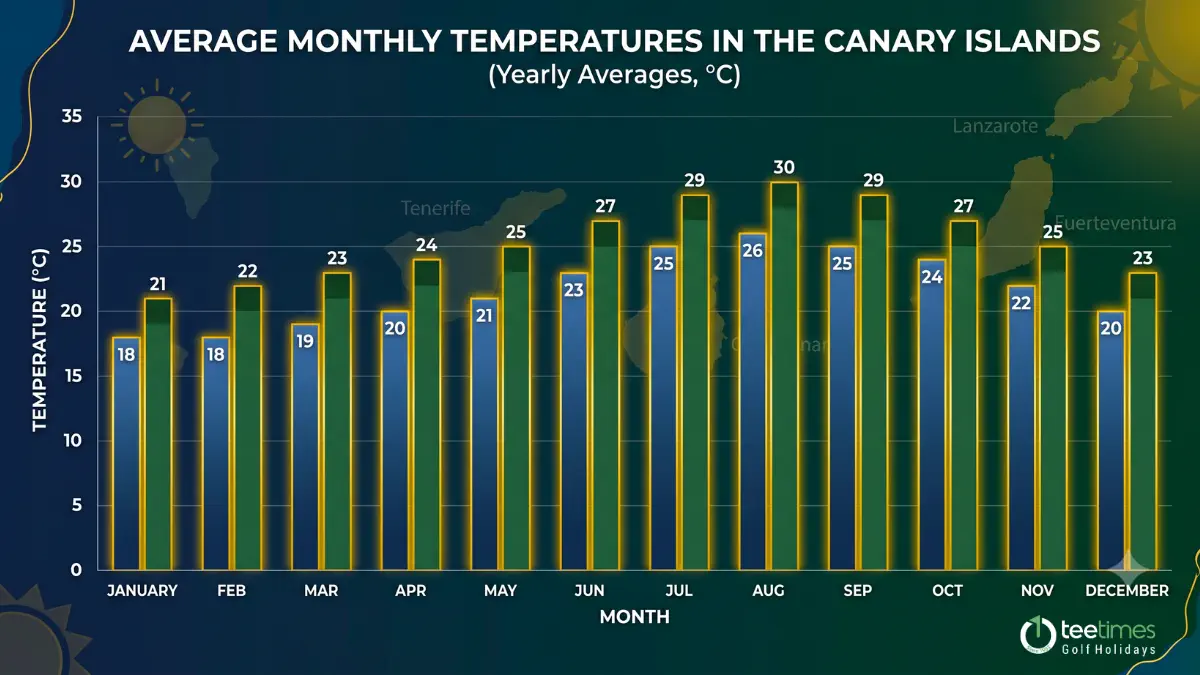
This isn’t a marginal difference, and it isn’t only a winter story. Tenerife and Gran Canaria sit around 20-21°C through January, mild enough that the sea stays swimmable through the coldest part of the year. Roll forward to August — peak Mediterranean heat everywhere else in Spain — and the islands only climb to around 24-29°C, kept in check by the same trade winds and current.

Monthly averages of the Canary Islands

Compare that with Málaga, where January highs average 14-17°C and August highs push past 33°C. The mainland Costas swing through a 20-degree range across the year. The Canaries barely move 7 or 8 degrees in either direction. For a golfer, that means the calendar stops being a variable — any month works, and the round at hand never has to be rescheduled around the heat or the cold. (Guide to Canary Islands)

Volcanic architecture, not Mediterranean cliché

The other thing the Canaries offer that the mainland Costas can’t replicate is the terrain itself. These are young volcanic islands, and the courses built on them tend to show it. Abama in Tenerife sits carved into a ravine on the island’s northwest tip, framed by banana plantations and the silhouette of Mount Teide — Spain’s highest peak — looming behind it.

Abama Golf Course Tenerife

Anfi Tauro in Gran Canaria threads through a steep inland valley with elevation changes that owe more to Arizona desert golf than anything coastal Spain usually offers.Lanzarote takes this further still. The Lanzarote Golf Course and the more compact Costa Teguise sit on an island whose entire landscape was shaped by eruptions as recent as the 1730s — black volcanic soil, lunar ridgelines, a backdrop that looks nothing like the rest of Spain because, geologically, it isn’t.

Tenerife: altitude and ocean in the same round

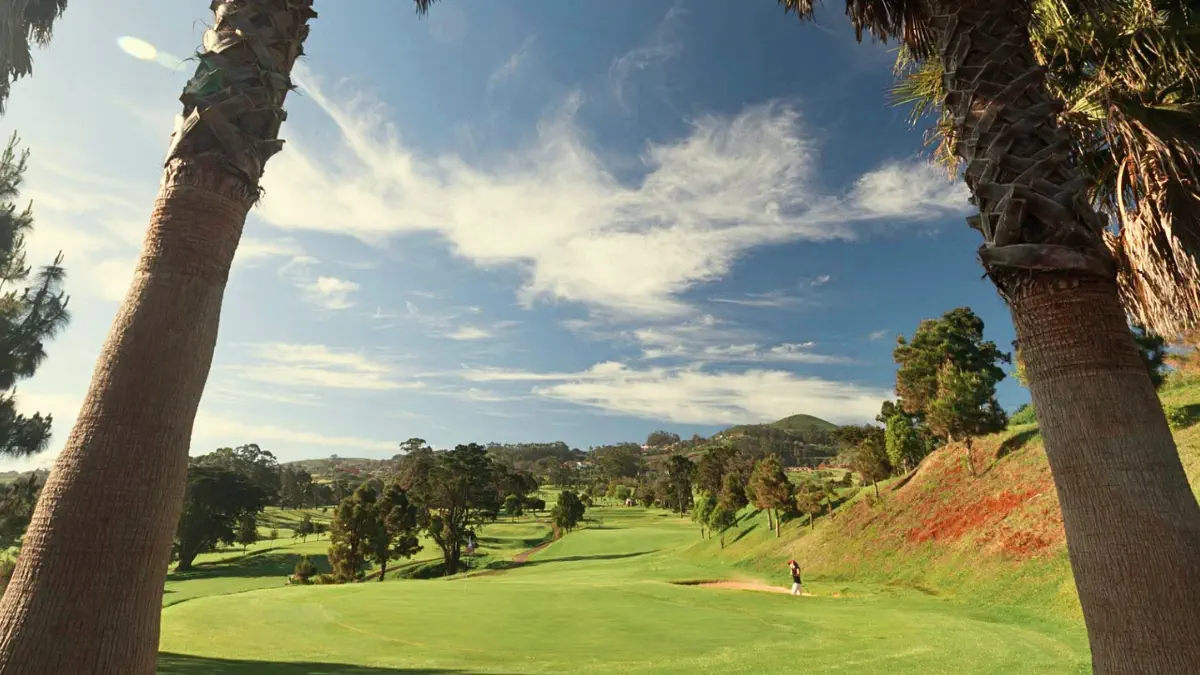
Tenerife’s golf benefits from genuine variety, helped along by an island that rises from sea level to nearly 3,700 metres inside a few dozen kilometres. Real Club de Tenerife, founded in the early twentieth century, remains one of the most established clubs in the Canaries.

Real Golf Club in Tenerife

Further south, Amarilla Golf & Country Club plays along volcanic cliffs above the Atlantic, with several holes running close enough to the water that the swing thoughts compete with the view.

Gran Canaria: a continent in miniature

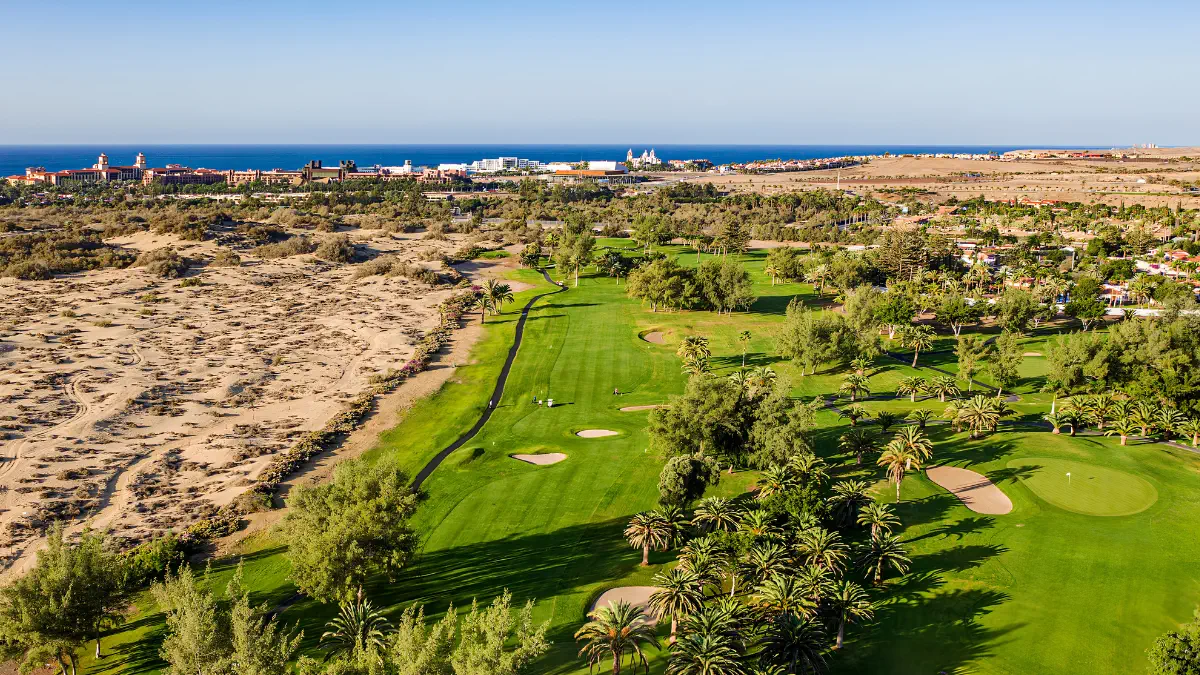
Gran Canaria is sometimes called a miniature continent, and the golf reflects that range. Maspalomas Golf Course runs along the edge of the island’s famous dunes — a links-style test with the Sahara-like sand dunes as a backdrop rather than the usual sea grass.

Maspalomas Golf Course, Sand Dunes aand Green Fairways

Real Club de Golf Las Palmas, meanwhile, is the oldest golf club in Spain, founded in 1891, and sits inside the rim of an extinct volcanic crater at Bandama — a setting that’s difficult to find anywhere else in Europe.

Where the rounds end the day

None of this matters much if the rest of the trip doesn’t hold up, and it does. The southern resorts on Tenerife and Gran Canaria are built for exactly this kind of break — proper hotels, good spas, and restaurants that take the local seafood seriously. Canarian cuisine has its own identity, distinct from the mainland: papas arrugadas with mojo sauce, fresh vieja parrotfish, and a wine scene shaped by volcanic soil that produces something genuinely unusual in the glass.

The golf, the climate, and the landscape all point the same direction: this is a destination that doesn’t ask the golfer to pick a season. There’s no “best time to go” caveat to factor in, no shoulder months to chase — just a calendar that stays playable from the first week of January to the last week of December.

Browse Canary Islands golf holidays and pick the month that suits you — not the one the weather dictates.


Vote for Tee Times

What to Pack for Summer Golf in the Algarve

Five days on course in proper southern European conditions. Here is what to bring — and one club selection tip that will save your short game.

The Algarve in summer runs hot. Temperatures between 28°C and 35°C are the July and August baseline, and the sun is on the fairway before most golfers have finished breakfast . Getting the kit right is the difference between five effortless rounds and five rounds spent thinking about the wrong things. Here is what actually matters. (weather2travel.com)

Book the early tee time. Pack to match.

The sensible Algarve summer round starts at 7am, or earlier at some courses. The fairways are quieter, the light is different, and the round is done before the heat peaks. What this means practically: lightweight, moisture-wicking polo shirts that breathe in the opening holes and survive the back nine without complaint. Golf shorts for most days. One thin wind layer is worth tucking in the bag for the early holes on western coast courses — Palmares and Boavista face the Atlantic directly, and the first hour there has its own temperature. Courses further east — Quinta do Lago and Vale de Lobo offer no such respite. Plan accordingly.

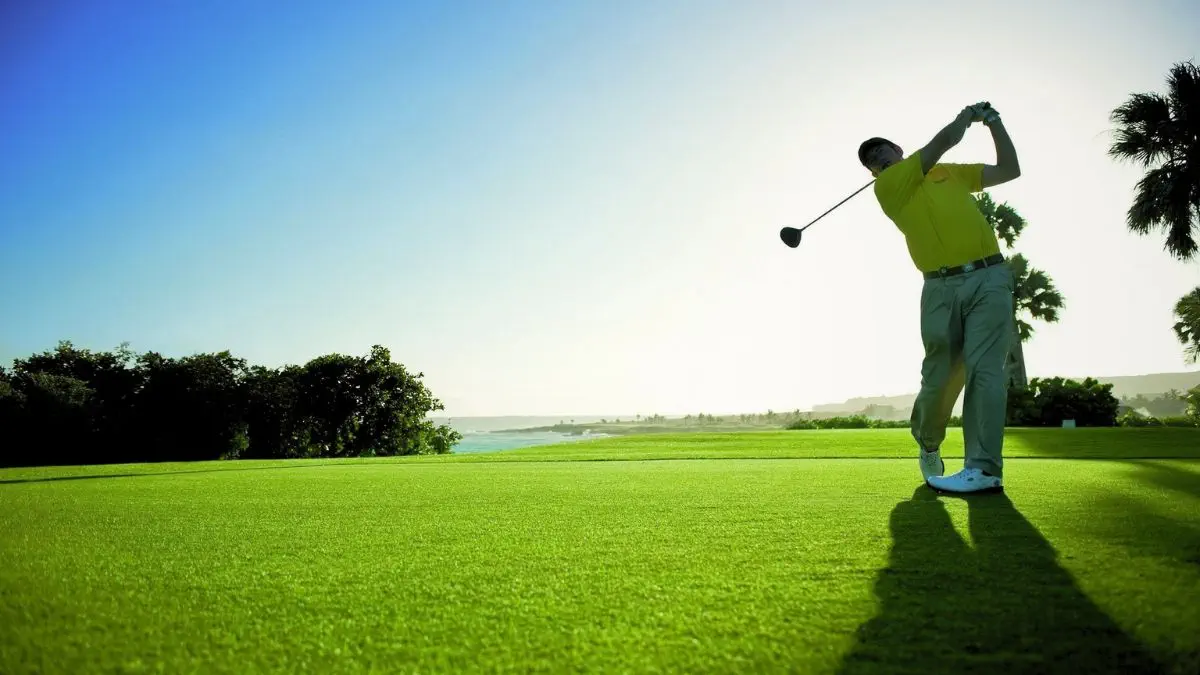
Golfer teeing off at sunrise on an Algarve course during summer golf

Sun protection is the serious kit

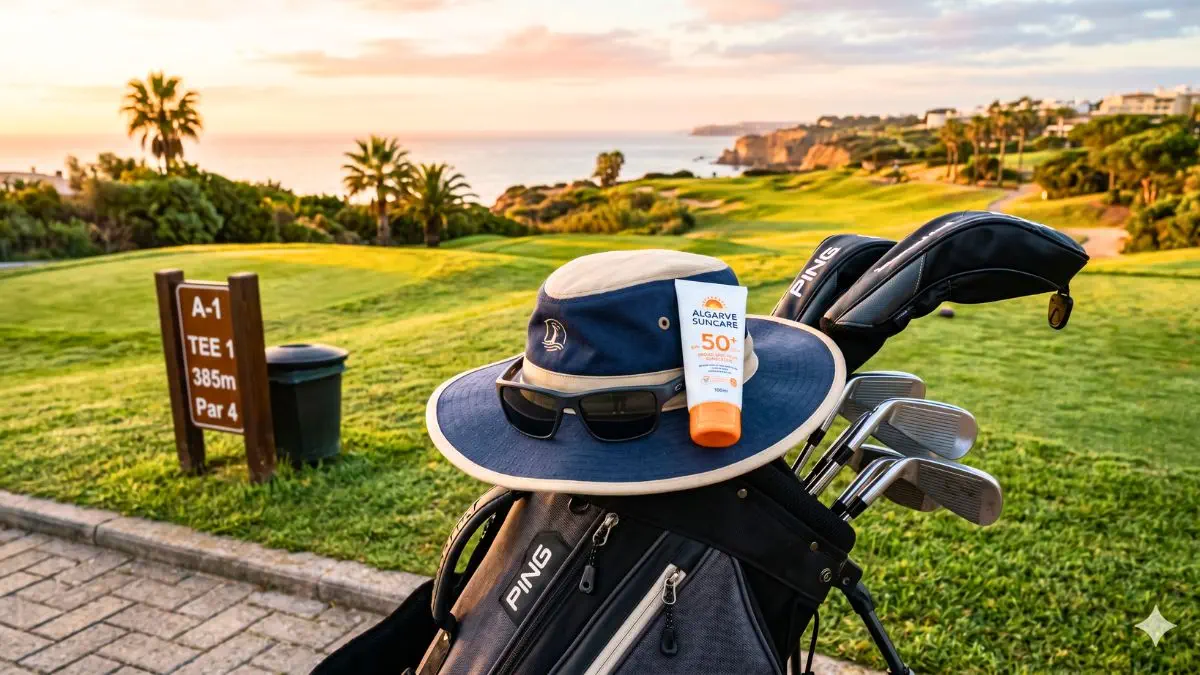
Five hours on an exposed Algarve fairway in July is five hours of direct UV exposure. The coastal breeze is convincing. The UV does not negotiate. Broad-spectrum SPF 30–50, applied before leaving the hotel and reapplied at the turn — Golf Digest recommends treating the nine-hole break as the standard reapplication point . A wide-brimmed hat over a baseball cap offers meaningful ear and neck protection that a peak alone does not. Sport sunglasses that stay in place during the swing. SPF lip balm — the one thing nobody ever packs and everyone eventually wishes they had.(Golf Digest)


Sun cream, wide-brimmed hat and polarised sunglasses laid out on a golf bag

The Algarve’s fairways have opinions

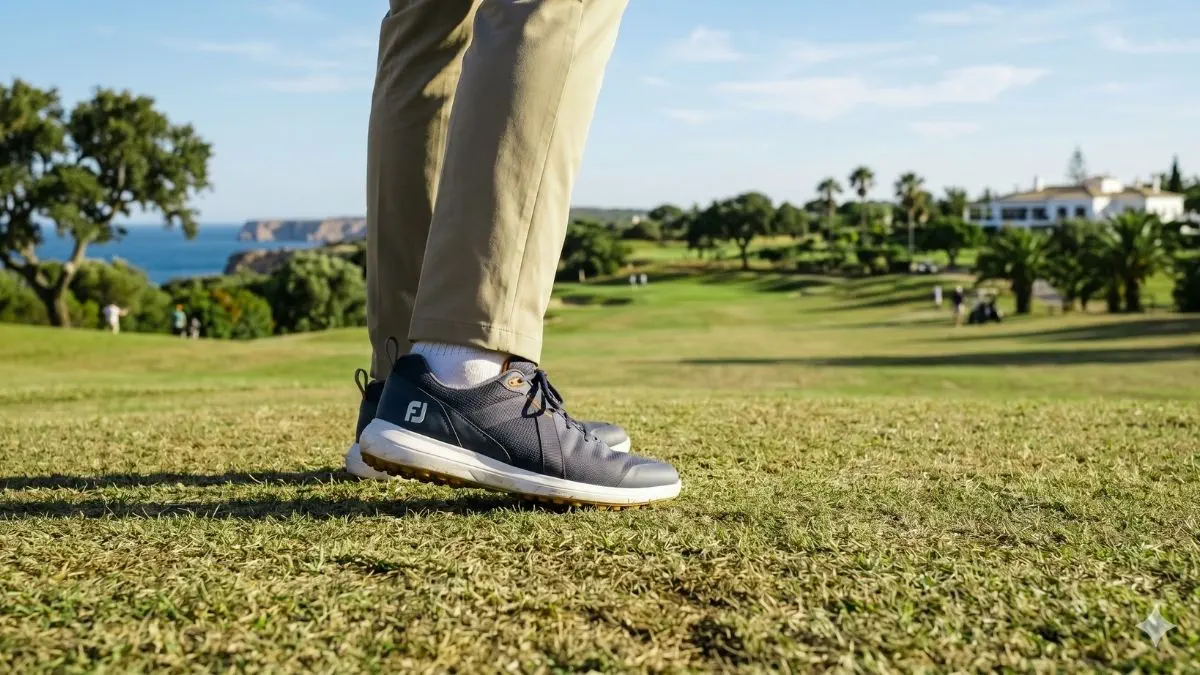
Algarve summer turf runs firm and fast. Around the greens it is grabby — a characteristic that catches visiting golfers more than once per round. A lob wedge with a rounded sole and significant camber handles this considerably better than a sharp leading edge . Spikeless golf shoes are the right call for the same reason: better traction on firm ground, and the clubhouse floor at the end of the round will thank you too. (Sounder Golf)


Spikeless golf shoes on a firm summer fairway at an Algarve golf course

Flying with clubs — or not

Travelling with a full set is manageable but adds time, cost, and a low-level airport anxiety that a golf holiday probably should not include. Tee Times Golf Holidays offers club hire — Callaway, Titleist, TaylorMade, Wilson, Mizuno, and Ping — delivered directly to your hotel or course, which removes the question entirely for shorter trips. If you do bring your own set, a stiff arm inside the travel bag protects the shafts on the flight. The rangefinder belongs in the carry-on, not the hold.

The evening matters too

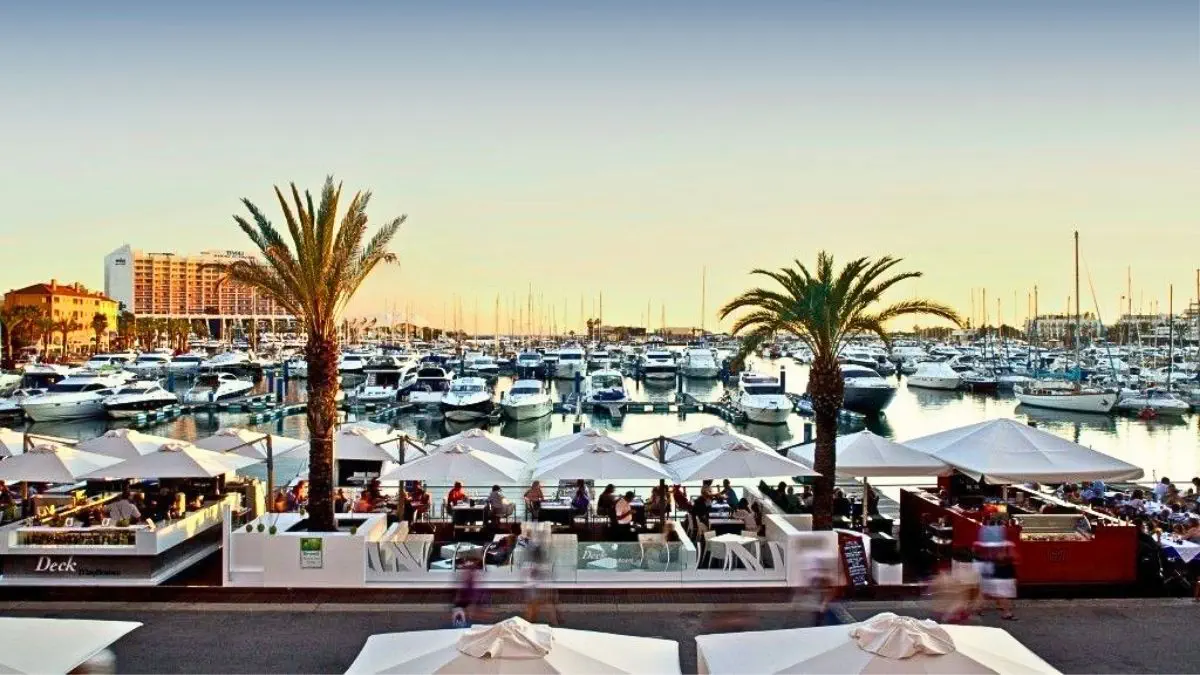
Algarve summer evenings are their own reward. The marina restaurants at Vilamoura, the harbour seafood spots at Ferragudo, the terrace bars at Quinta do Lago — all of them deserve something better than a golf shirt with a brand logo on the chest. None require a tie, but smart casual is the floor. Pack two or three proper off-course outfits. One light layer for late dinners when the air finally cools.


Outdoor dining on the waterfront at Vilamoura marina on a summer evening

Get the packing right and the Algarve does the rest. Courses that reward the early start. Evenings that stretch long enough to mean it. Carabineiros — big scarlet prawns the size of a hand — eaten outside with the last of the light still in the sky.

Browse our Algarve golf holidays and start planning your summer.


Vote for Tee Times