The Golden Triangle, Explained

Vilamoura, Vale do Lobo and Almancil — what the Golden Triangle actually is, what’s inside it, and why the marketing doesn’t always tell the full story.

Few corners of European golf generate more name-dropping per square mile. The Golden Triangle takes its name from three communities: Vilamoura, Vale do Lobo and Almancil — a contained stretch of central Algarve coastline roughly twenty minutes from Faro. Inside those boundaries sits some of Portugal’s most written-about golf. Most golfers have encountered the names. Fewer know what distinguishes one course from another. That is worth settling before the booking.

What the Golden Triangle Actually Is

The term began as property-market shorthand for the affluent residential corridor connecting Vilamoura, Vale do Lobo and Almancil. Golf marketing adopted it, and it stuck. In practice, it describes a contained area where championship-calibre courses, the protected lagoons of the Ria Formosa, and some of Portugal’s most expensive real estate exist within a short drive of each other. It is not a resort. It is a geographic reality.
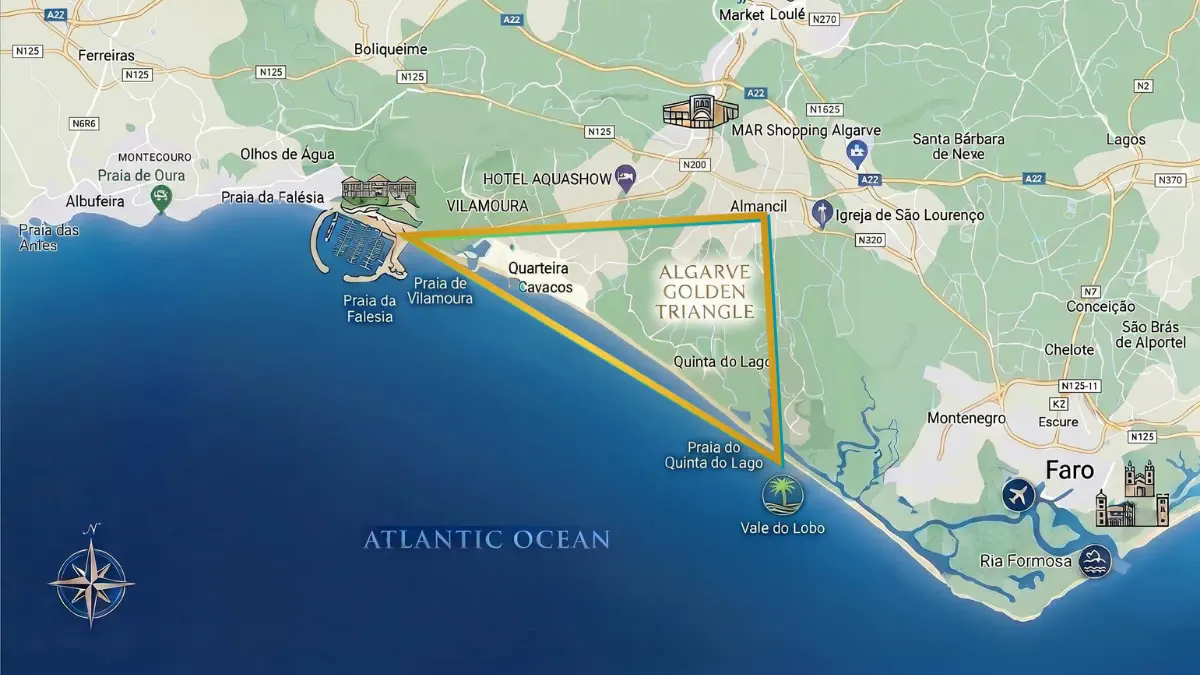
The Algarve Goldn Triangle

Vilamoura: A Golfing Institution

Vilamoura marks the western point of the Triangle and is, by volume, the most significant golf destination in the Algarve. Five courses operate here, from a half-century-old classic to a modern European Tour venue.

The Vilamoura Old Course, designed by Frank Pennink and opened in 1969, has hosted the Portuguese Open multiple times and remains the most satisfying round in the region — a mature, pine-lined layout that demands course management over raw power. It is the course that built Vilamoura’s reputation, and it has not lost the thread.
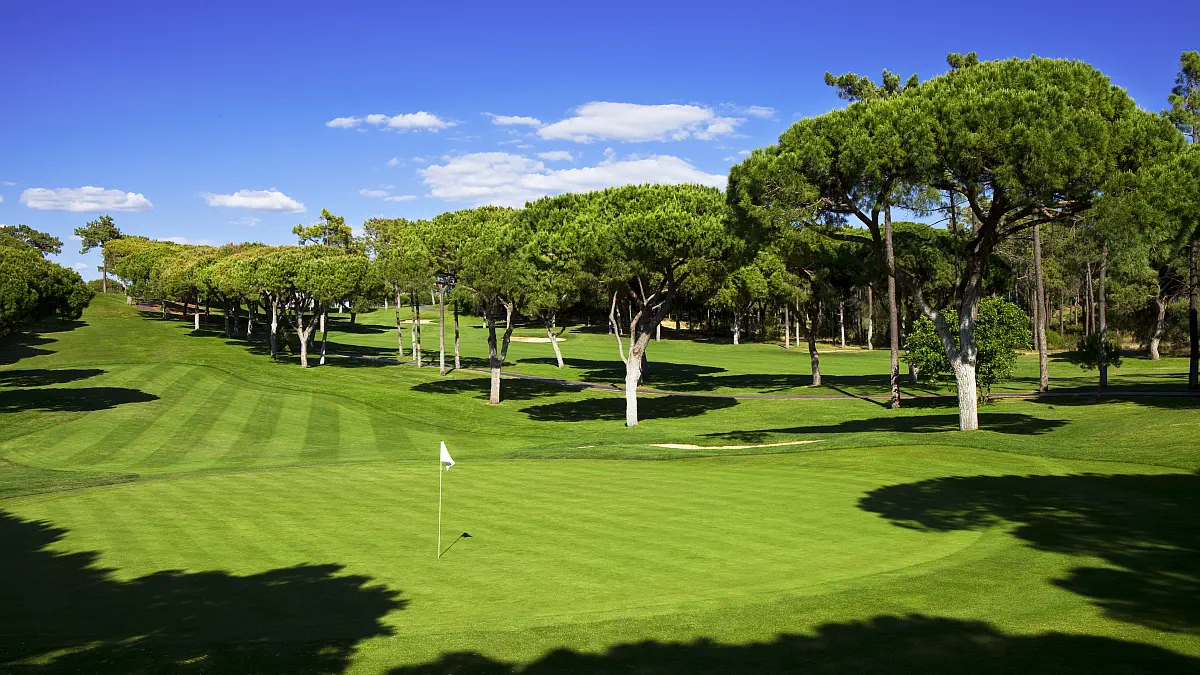
Vilamoura Old Course pine-lined fairway, Algarve, Portugal

Pinhal, Laguna and Millennium courses complete the portfolio. Pinhal for its pine-forest atmosphere, Laguna for its water-threaded layout, Millennium for a more open, links-influenced feel — together offering enough variety to anchor a full week’s golf without leaving the resort.

Vale do Lobo: The Resort That Started It All

Vale do Lobo marks the southern point of the Triangle. Established in 1962 — a full decade before Quinta do Lago — it was the first luxury resort development in the Algarve, and remains the largest in Portugal.  Sir Henry Cotton’s original layout was eventually divided into the two courses that exist today. (Vale do Lobo)

The Vale do Lobo Royal is the reason most golfers make the trip. Rocky Roquemore’s redesign in the late 1990s gave it the coherence it now carries through eighteen holes. The par-3 16th — over 200 metres from the back tee, full carry over a clifftop ravine — is one of the most photographed holes in European golf. It is not merely a spectacle. It is a hard hole played honestly.
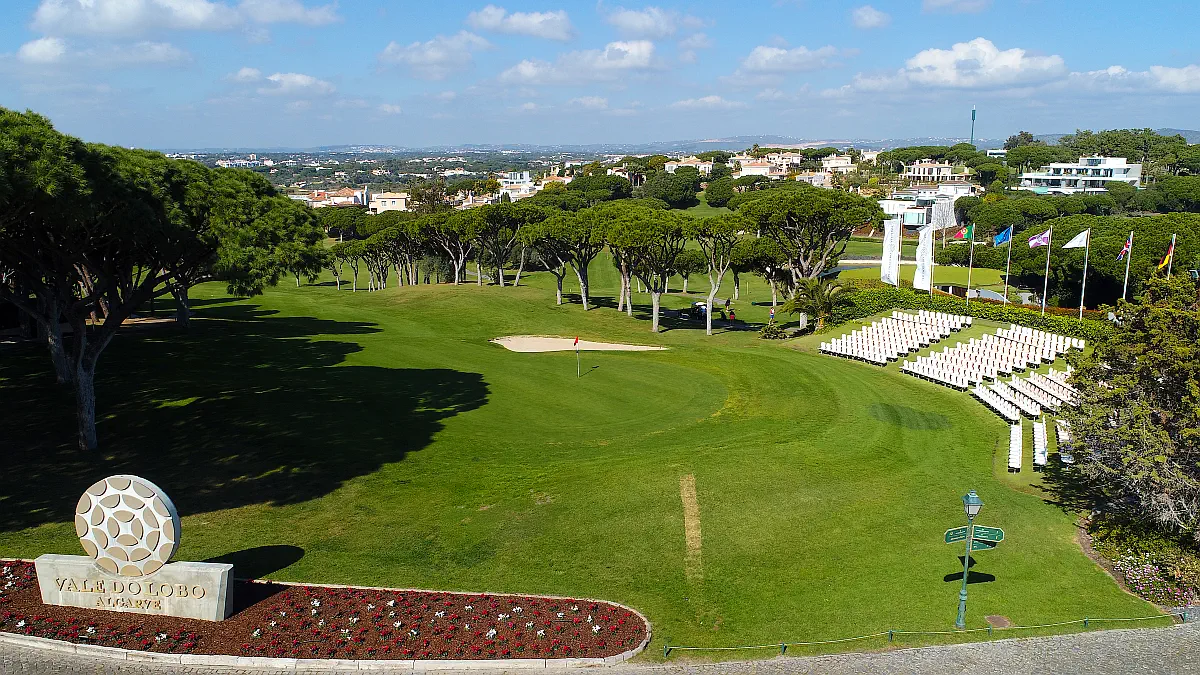
Vale do Lobo Royal Course

The Vale do Lobo Ocean is the secondary option. Several back-nine holes skirt the beach, lending a genuine links-like quality — best treated as a complement to the Royal rather than a substitute.

Almancil: The Northern Corner — and the Most Storied Ground

The northern corner of the Triangle sits around Almancil, and it is here that the Algarve’s most prestigious golfing addresses are concentrated. The Quinta do Lago estate runs three courses; San Lorenzo operates alongside them as its own entity.

Quinta do Lago was founded in 1972 on land that had belonged to a single family for three centuries. It hosted its first Portuguese Open in 1976 — played in military tents, without permanent facilities — and has carried that competitive pedigree ever since. The Quinta do Lago South is the flagship: a mature, precisely conditioned par 72 that has hosted the Portuguese Open eight times, including Colin Montgomerie’s record 24-under-par victory in 1989 — his first European Tour win, by eleven strokes. (DP World Tour)
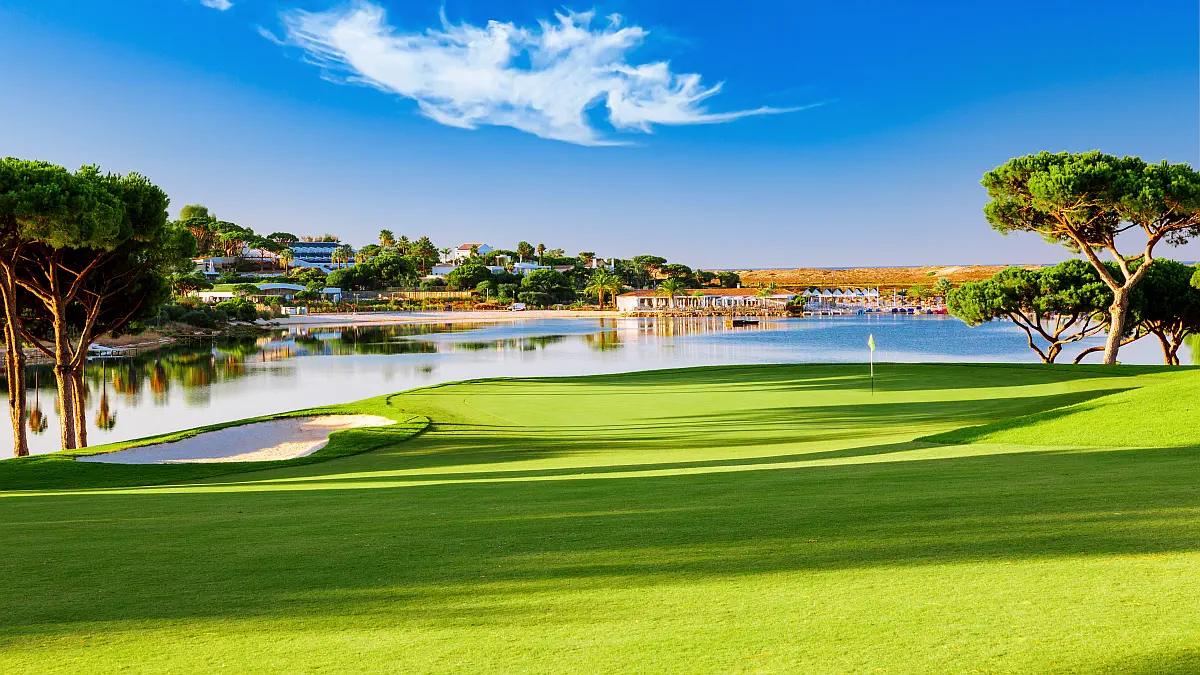
Quinta do Lago South, 16th hole

The Quinta do Lago North was redesigned in 2014 in a €9 million project overseen by Paul McGinley and Beau Welling — longer and more exposed, with modern bunkering that tests club selection as much as ball-striking. Laranjal, opened in 2009 on a former orange grove, is quieter in atmosphere; golfers who return to Quinta do Lago more than once often find themselves drawn back to it.

Beyond the courses, Quinta do Lago is effectively self-contained — restaurants, a spa, a lake, and the Ria Formosa Natural Park on the doorstep. For those travelling with non-golfers, no other address in the Triangle makes the same case.

San Lorenzo rounds out the corner. Opened in 1988 and designed by Joseph Lee and Rocky Roquemore, its routing winds through pine forest and alongside the Ria Formosa lagoons — herons, white storks and purple gallinules visible from the fairways. For golfers who want a course that sits within a landscape rather than imposed upon it, San Lorenzo offers something the others do not.
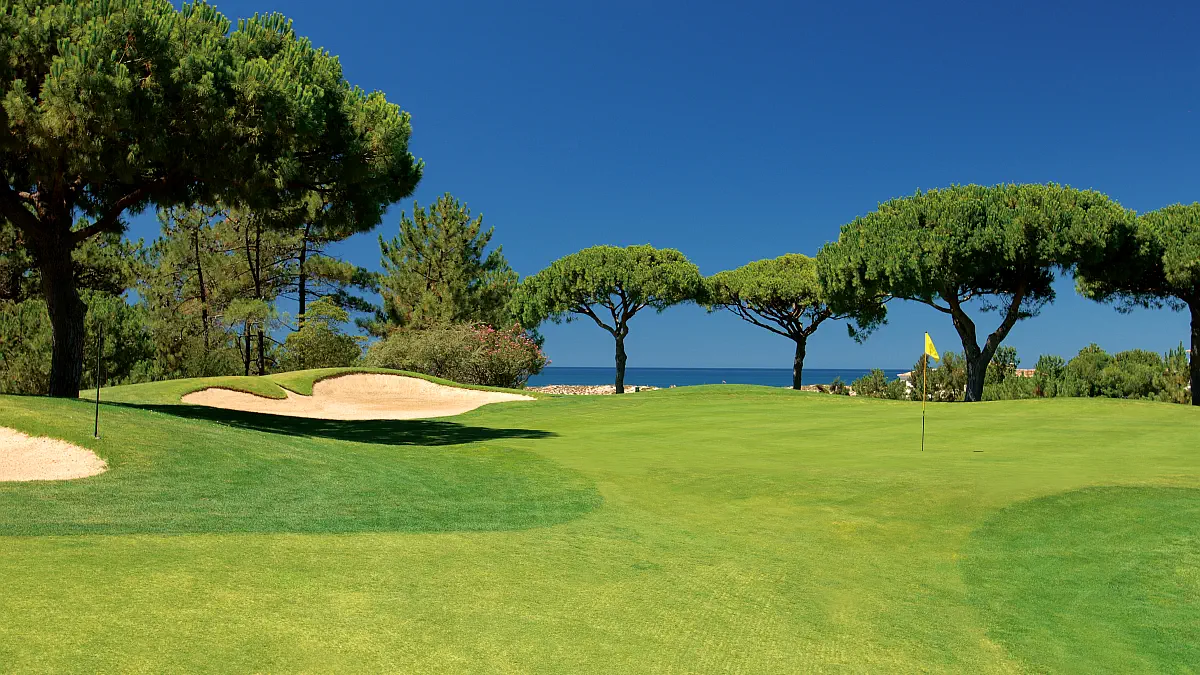
San Lorenzo Golf Course holes bordering the Ria Formosa lagoons

Who Should Play Here — and What the Marketing Doesn’t Say

Green fees in the Golden Triangle sit at the upper end of the Algarve’s range, and the courses earn them. Championship conditioning, histories built through decades of competitive golf, and settings that cannot be replicated elsewhere on the peninsula — this is what the premium delivers, and for a golfer playing at this level, it is consistently there.

What the marketing tends to compress is the variety within the Triangle. These courses are not interchangeable. Quinta do Lago South, San Lorenzo and the Vilamoura Old Course are the prestige rounds — the names you come back from and mention first. The Victoria and the North are serious tests on their own terms. Laranjal and the Pinhal are the surprises that convert first-timers into regulars. The Ocean and Laguna offer a different texture to the week — best played alongside the headline courses rather than instead of them.

The Golden Triangle is, in the end, a collection of courses that ask to be taken seriously — and that reward golfers who do. History, challenge, and a setting worth the flight, with an evening in Vilamoura or Almancil that matches the quality of the day.

For those planning a trip, browse our Algarve golf holidays to see what Tee Times Golf Holidays — Europe’s Best Golf Tour Operator 2025 — can put together.

Vote for Tee Times

What to Pack for Summer Golf in the Algarve

Five days on course in proper southern European conditions. Here is what to bring — and one club selection tip that will save your short game.

The Algarve in summer runs hot. Temperatures between 28°C and 35°C are the July and August baseline, and the sun is on the fairway before most golfers have finished breakfast . Getting the kit right is the difference between five effortless rounds and five rounds spent thinking about the wrong things. Here is what actually matters. (weather2travel.com)

Book the early tee time. Pack to match.

The sensible Algarve summer round starts at 7am, or earlier at some courses. The fairways are quieter, the light is different, and the round is done before the heat peaks. What this means practically: lightweight, moisture-wicking polo shirts that breathe in the opening holes and survive the back nine without complaint. Golf shorts for most days. One thin wind layer is worth tucking in the bag for the early holes on western coast courses — Palmares and Boavista face the Atlantic directly, and the first hour there has its own temperature. Courses further east — Quinta do Lago and Vale de Lobo offer no such respite. Plan accordingly.

Golfer teeing off at sunrise on an Algarve course during summer golf

Sun protection is the serious kit

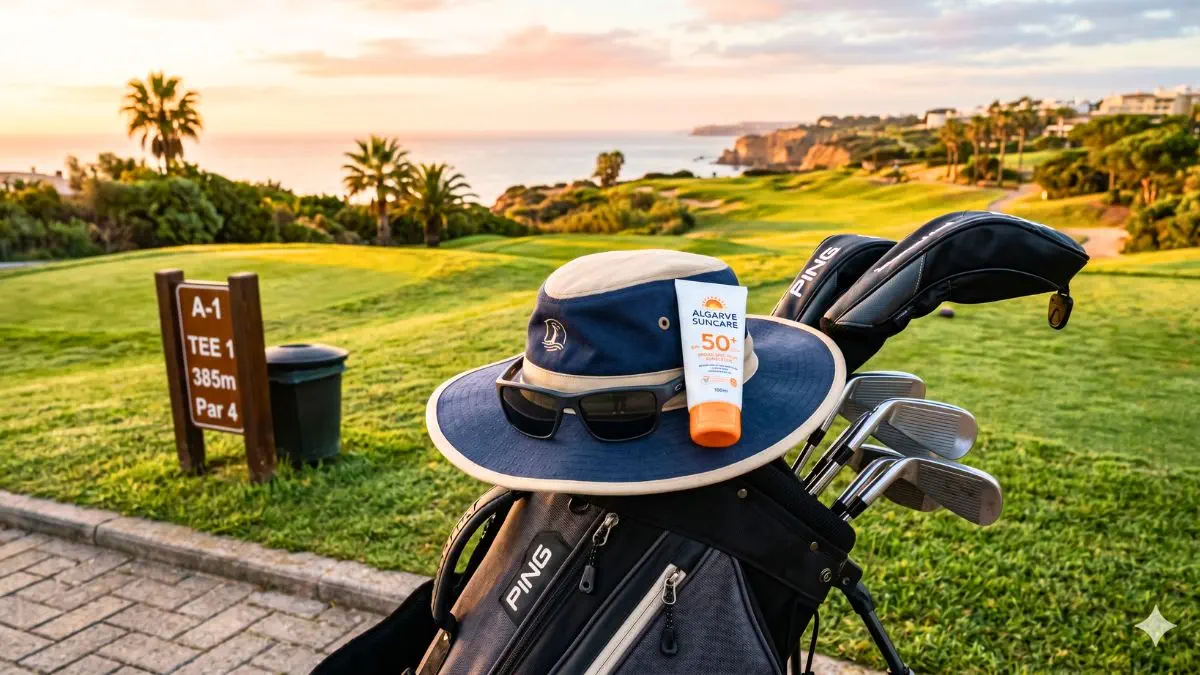
Five hours on an exposed Algarve fairway in July is five hours of direct UV exposure. The coastal breeze is convincing. The UV does not negotiate. Broad-spectrum SPF 30–50, applied before leaving the hotel and reapplied at the turn — Golf Digest recommends treating the nine-hole break as the standard reapplication point . A wide-brimmed hat over a baseball cap offers meaningful ear and neck protection that a peak alone does not. Sport sunglasses that stay in place during the swing. SPF lip balm — the one thing nobody ever packs and everyone eventually wishes they had.(Golf Digest)


Sun cream, wide-brimmed hat and polarised sunglasses laid out on a golf bag

The Algarve’s fairways have opinions

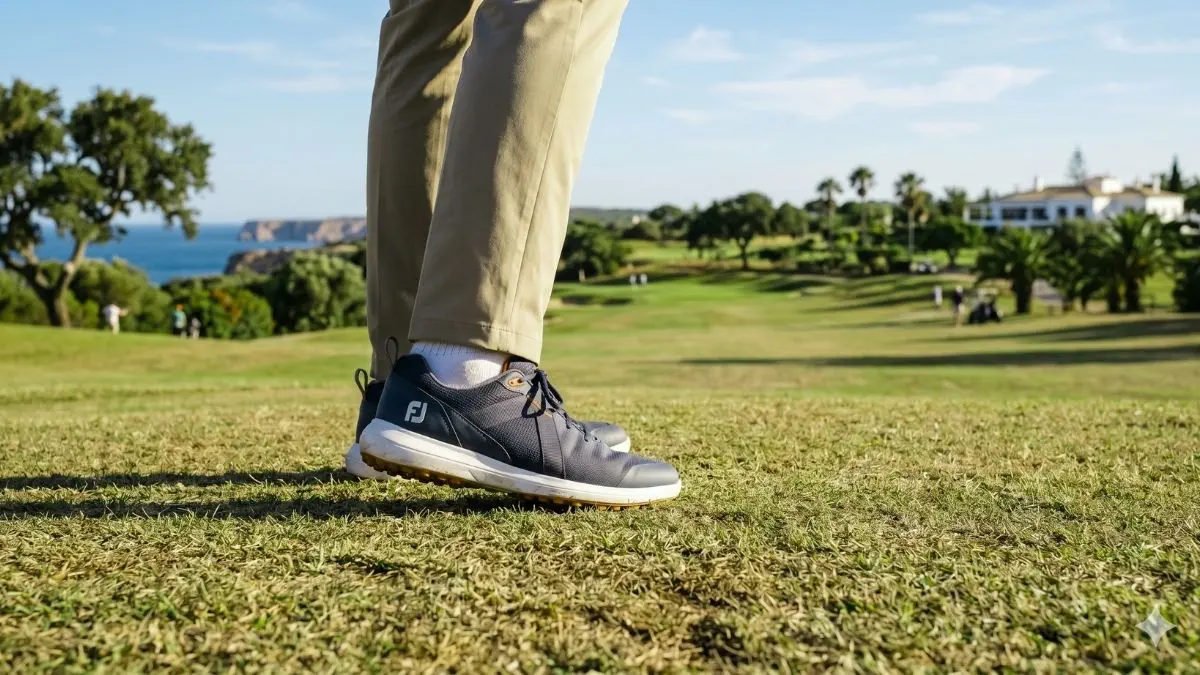
Algarve summer turf runs firm and fast. Around the greens it is grabby — a characteristic that catches visiting golfers more than once per round. A lob wedge with a rounded sole and significant camber handles this considerably better than a sharp leading edge . Spikeless golf shoes are the right call for the same reason: better traction on firm ground, and the clubhouse floor at the end of the round will thank you too. (Sounder Golf)


Spikeless golf shoes on a firm summer fairway at an Algarve golf course

Flying with clubs — or not

Travelling with a full set is manageable but adds time, cost, and a low-level airport anxiety that a golf holiday probably should not include. Tee Times Golf Holidays offers club hire — Callaway, Titleist, TaylorMade, Wilson, Mizuno, and Ping — delivered directly to your hotel or course, which removes the question entirely for shorter trips. If you do bring your own set, a stiff arm inside the travel bag protects the shafts on the flight. The rangefinder belongs in the carry-on, not the hold.

The evening matters too

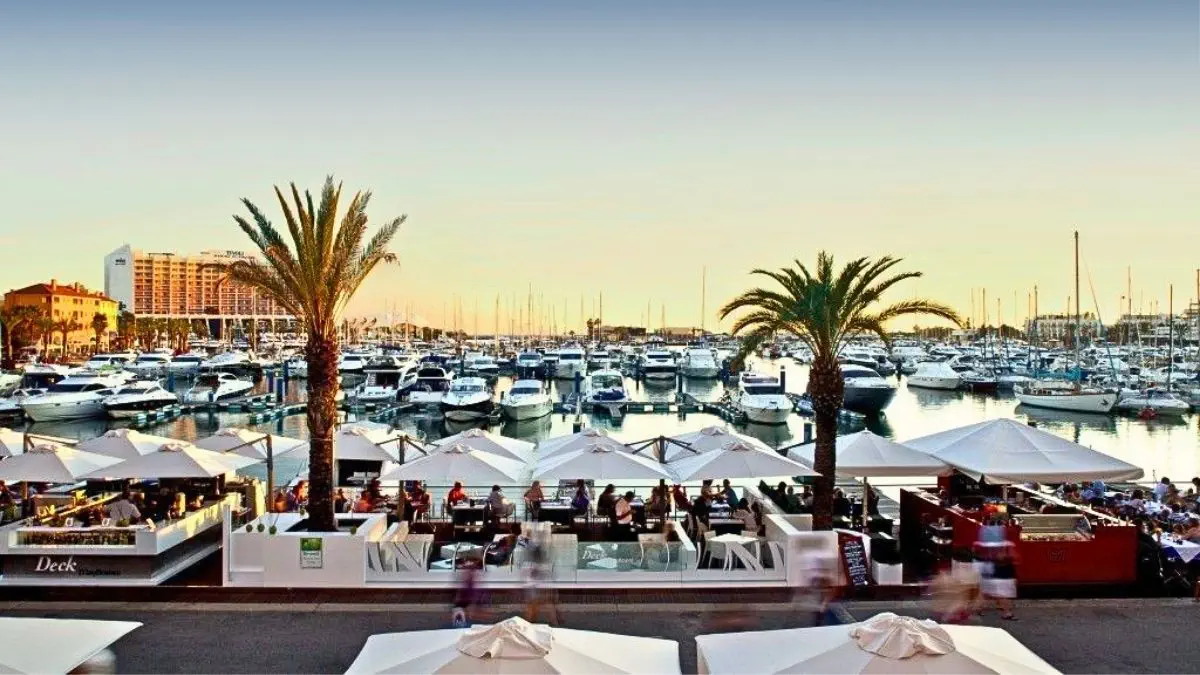
Algarve summer evenings are their own reward. The marina restaurants at Vilamoura, the harbour seafood spots at Ferragudo, the terrace bars at Quinta do Lago — all of them deserve something better than a golf shirt with a brand logo on the chest. None require a tie, but smart casual is the floor. Pack two or three proper off-course outfits. One light layer for late dinners when the air finally cools.


Outdoor dining on the waterfront at Vilamoura marina on a summer evening

Get the packing right and the Algarve does the rest. Courses that reward the early start. Evenings that stretch long enough to mean it. Carabineiros — big scarlet prawns the size of a hand — eaten outside with the last of the light still in the sky.

Browse our Algarve golf holidays and start planning your summer.


Vote for Tee Times

Green Fees in the UK causing valid concern

£495 for a Round of Golf. Seriously.

Green fees in the United Kingdom have always been climbing. But 2026 has delivered a number that deserves a moment of quiet contemplation: £495. That is the peak visitor green fee at Royal Birkdale this summer — up 24% on last year, and enough to make even the most devoted links pilgrim pause mid-swing.

Royal-Birkdale-Golf-Course-Southport

The Numbers Are Startling

Royal Birkdale is not alone. In 2021, the average green fee across the UK’s top 100 courses was £161. In 2026, that figure stands at £265 — a five-year increase of nearly 65%. The most recent annual rate of increase has outpaced inflation by more than three times. Fifteen courses in Great Britain and Ireland now charge £400 or more for a peak visitor round, up from just eight last year. Add a caddie to your Birkdale round and you are looking at well north of £575 before you have bought a sandwich. 

A Round at Birkdale or a Weekend in the Algarve?

Here is where it gets interesting. £495 is, give or take, the cost of a return flight from London to Faro, two nights in a decent Algarve hotel, and a round at one of the finest courses in Portugal — with change left for a very good dinner and a bottle of Alentejo red. The arithmetic is not flattering to Southport.

Golden-Triangle-Golf-Quinta do Lago

Portugal’s top courses — Quinta do Lago South, Monte Rei, Oitavos Dunes, Vilamoura Old — charge green fees that rarely exceed €180 at peak. They are played in reliable sunshine, on immaculate surfaces, with the Atlantic visible from half the tees. Nobody is suggesting they are Royal Birkdale. But at a third of the price, on a warm May morning with no wind chill involved, they make a compelling case.

The Links Dream Is Not Dead — Just Expensive

To be fair to Birkdale, The Open Championship returns there in July for the 11th time — and playing a major venue in its Open year is a genuine bucket-list experience. The club has also launched a ballot offering UK golfers a round for £99, which is a thoughtful gesture. But for the majority of visiting golfers, £495 is simply the asking price, take it or leave it. 

There Is Another Way

Golden-Triangle-Golf-Vilamoura-Old

For golfers who want exceptional courses, reliable weather, and a holiday that does not require remortgaging, the Algarve, Lisbon, and the Costa del Sol have been making that argument for years. In 2026, with UK green fees climbing past £495, the case has never been easier to make.

Browse our Portugal golf holidays and see what £495 can really buy you.