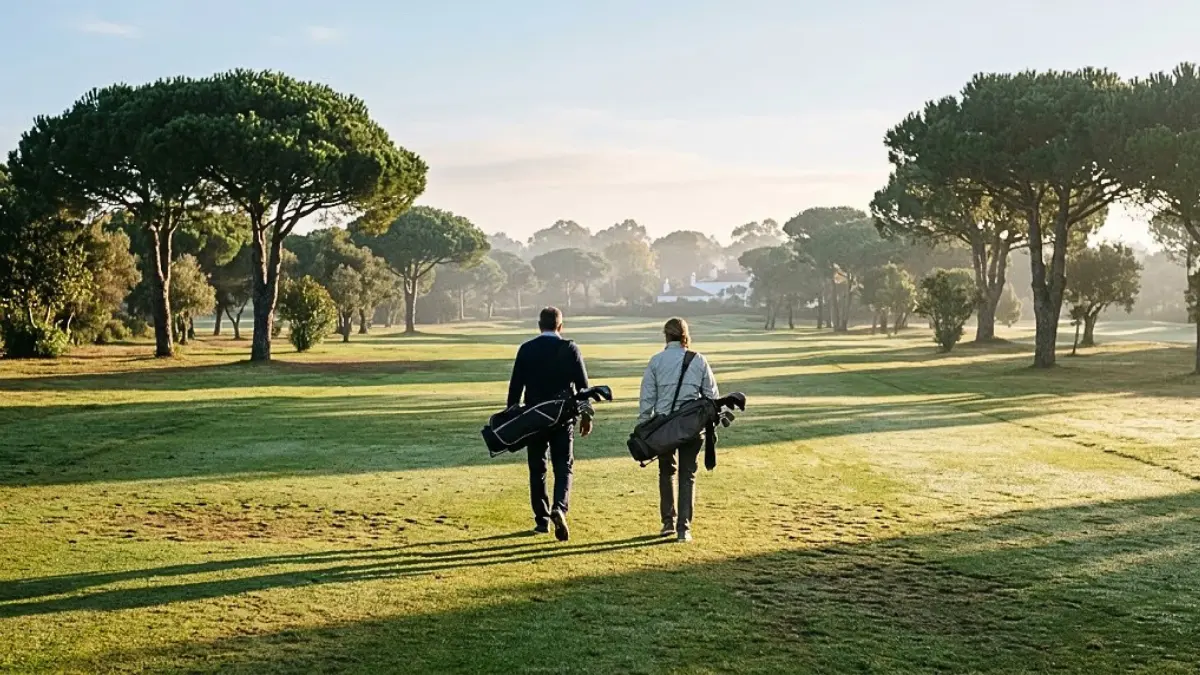
Mild weather, firm fairways and the eternal question of whether to bring a jumper. (Bring the jumper.)
Every autumn, as the clubhouse radiators clank into life, golfers from the UK, Ireland and northern Europe head south-west to a coast where more than 40 courses sit between the Atlantic and the Serra do Caldeirão. There is no wrong time to play here, only different ones: autumn keeps the summer’s warmth, winter is mild and unhurried, and spring brings the courses to their peak. The weather is kind. When it isn’t, it rarely holds a grudge for long.
The Shape of the Season
Autumn is the Algarve at its most generous. October still averages highs of around 23°C, November about 19°C, and the ground holds enough summer firmness to give the ball a proper run. Shorts in the morning, shirtsleeves by the turn.
Winter, from December to February, brings daytime highs of 16–17°C and overnight lows nearer 8°C. December and January are the wettest months, though rain rarely falls on more than six or seven days a month — which, to anyone who plays through a British winter, will sound less like a warning than a holiday brochure. It is also the quietest, best-value stretch of the year, with fairways to yourself and tee times to spare. (Climate-Zone)
Spring is the high season proper. March, April and May bring highs of 19–22°C, the fewest rainy days, courses in peak condition and, inevitably, everyone else. If you want a particular course at a particular time, book early.
The Overseeding Question
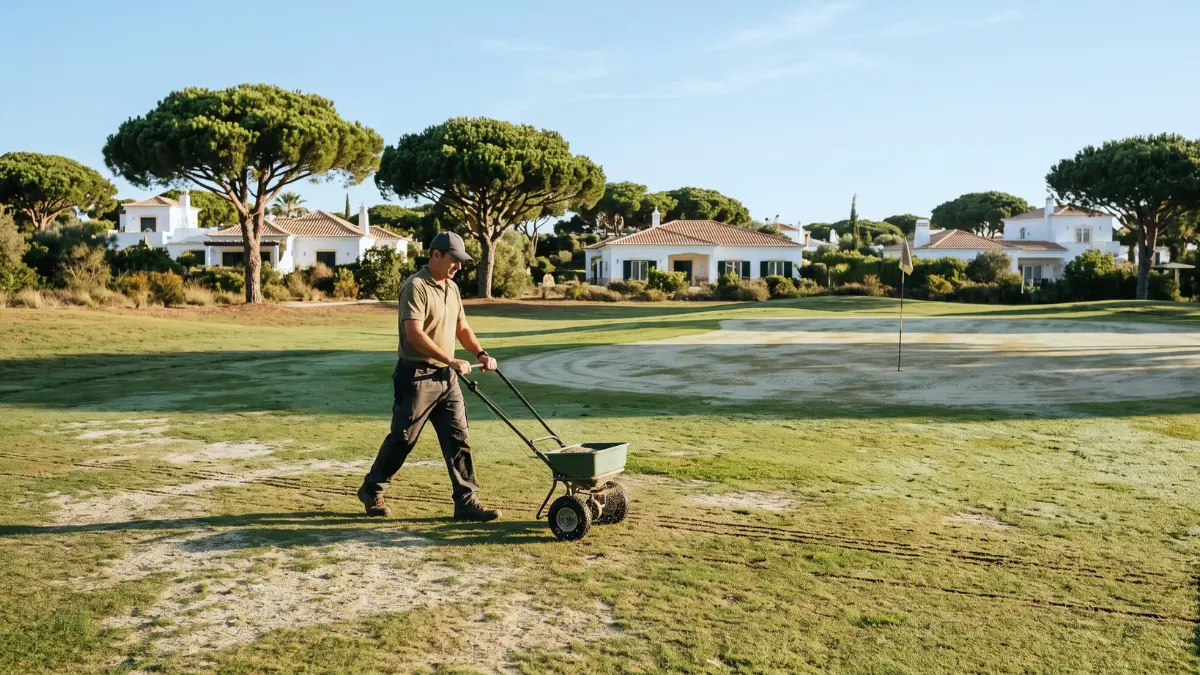
Here is the thing the glossy guides tend to leave out. Many Algarve fairways are laid with warm-season grasses that thrive in the summer heat and fade in winter, so in late September and October a good number of courses overseed with cooler-weather grass to keep them green through to spring. Greens are often hollow-tined and top-dressed at around the same time.
That can mean a course closed for a few days or a couple of weeks, temporary greens, or putting surfaces with the texture of a beach. If your trip falls in early autumn, ask about maintenance dates before you book rather than on the first tee. The reward comes a few weeks later, when the fairways are at their greenest and the greens at their truest.
Morning Dew, Afternoon Wind
An early tee time in the cooler months is a crisp affair. Expect single figures on a winter dawn, heavy dew and greens that putt slow until the sun has had a go at them. Give it a couple of hours and the jacket comes off.
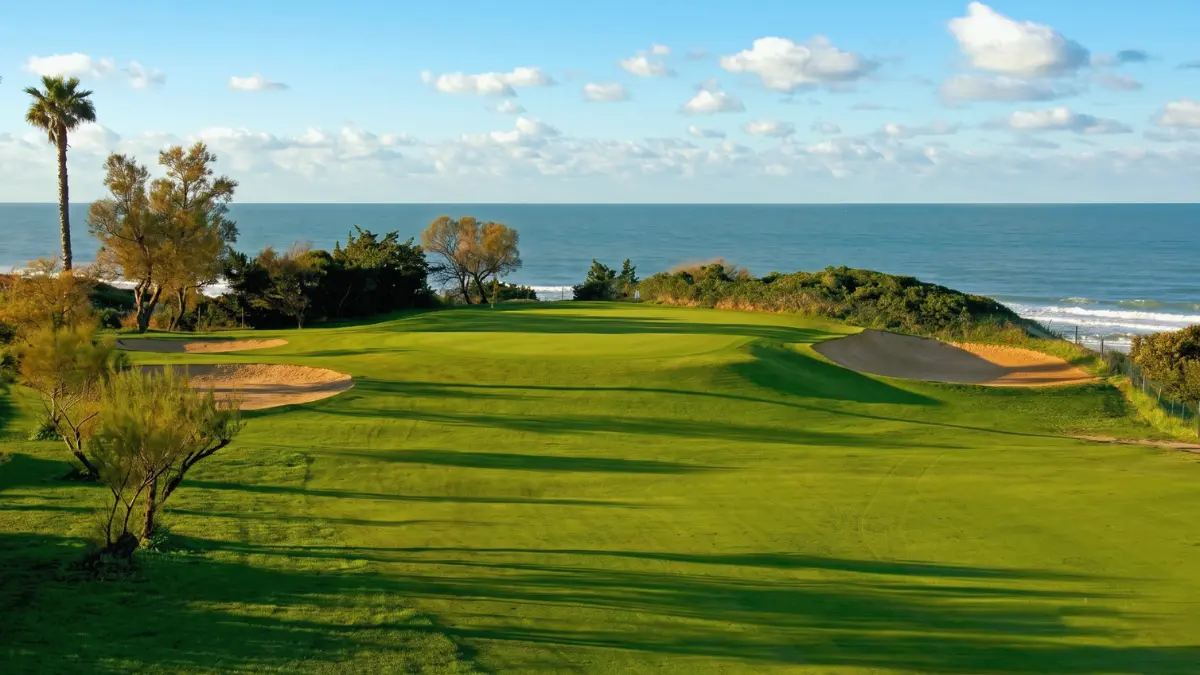
The afternoons have their own character. A breeze off the Atlantic tends to build after lunch, most noticeably on the coastal and clifftop holes further west, and it has a habit of turning a comfortable seven-iron into a hopeful six.
Mind the daylight, too. In December the sun sets at around half past five, so a mid-afternoon tee time can leave the last few holes in the gloaming. Portugal shares a time zone with the UK and Ireland, which at least means there is no jet lag to blame.
What to Pack
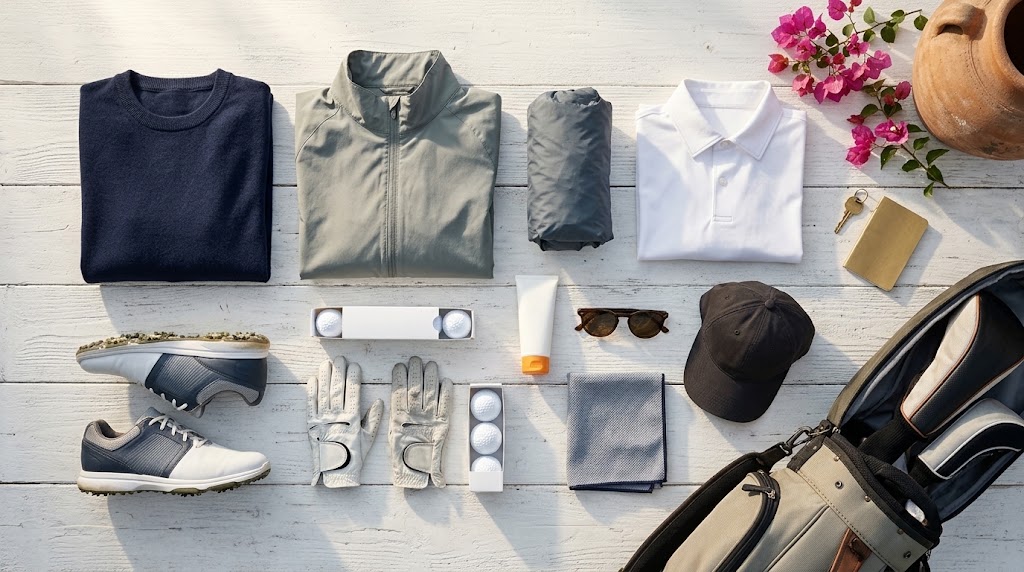
The Algarve rewards layers rather than heavy kit. A sensible bag for autumn to spring looks something like this:
- A base layer and a mid-weight jumper for early starts, easily peeled off by the fourth hole
- A lightweight windproof for those Atlantic afternoons
- Waterproofs from November to February; you may not need them, which is precisely why you should pack them
- Sun cream, a hat and sunglasses all year — the winter sun is gentler, not absent
- Soft spikes, spare gloves and a towel for dewy mornings
- More balls than you think, given how fond Algarve architects are of water
- Your handicap certificate, as many courses ask for proof and some set a maximum
Check your airline’s fee for golf clubs before you fly; the check-in desk is a poor place to find out. Or skip the fuss altogether and hire a set when you arrive.
Dress Codes and Buggies
Dress codes here are traditional without being fussy. A collared shirt and tailored trousers or shorts will see you through almost anywhere; denim, football shirts and beachwear will not. The smarter clubhouses expect the same standard at lunch, so it is wise to keep a change of shirt in the car.
Buggies are popular, partly for the terrain and partly because the walk between some greens and tees is long enough to count as sightseeing. After heavy rain, or while new grass is establishing in autumn, many courses restrict them to the paths.
After the Round
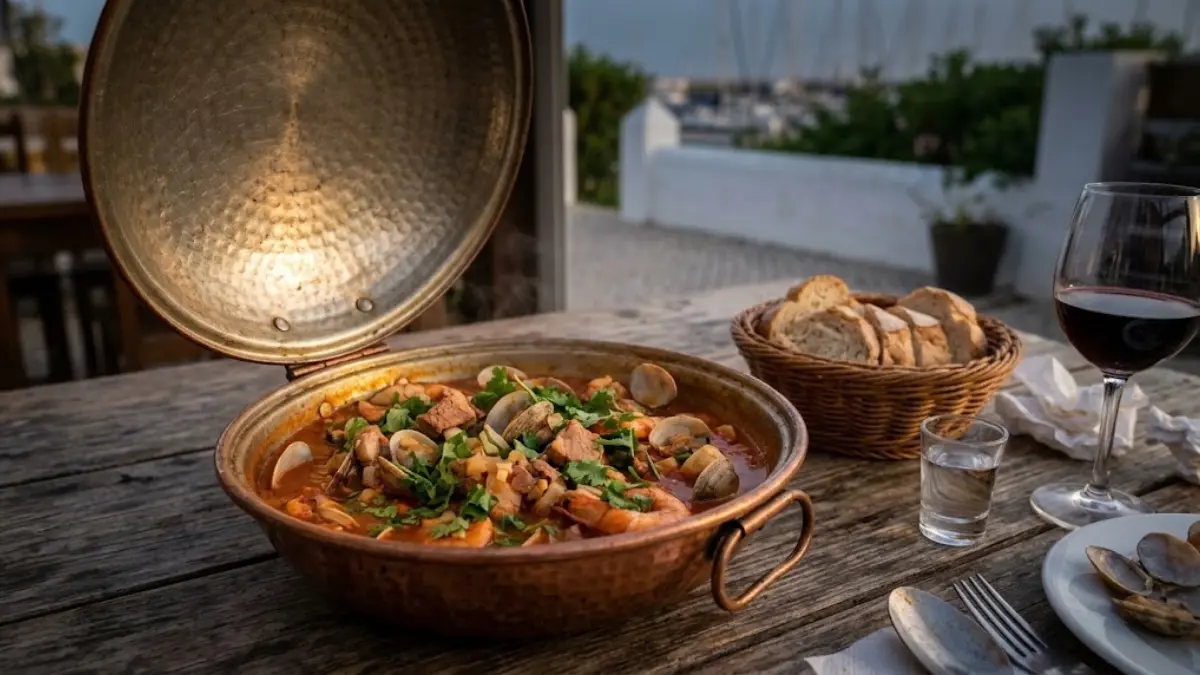
The cooler months are when Algarve cooking comes into its own. A steaming cataplana of clams and pork as the evening draws in, an arroz de marisco by the marina, a glass of local red and, if the round went well, a small medronho to toast it. If it went badly, the medronho is equally effective. Then there is only tomorrow’s tee time to think about.