Double Glory at Vidago Palace — AQUAPOR Circuit Finds Its Round Three Champions

Luciana Reis’ 142-stroke aggregate topped every single competitor, while João Miguel Pereira is making a habit of winning.

For a tournament hosting 73 golfers in the hills of northern Portugal, the 3rd AQUAPOR Circuit 2026 produced remarkably clear outcomes. At Vidago Palace on 16–17 May, Luciana Reis (Arquitectos) and João Miguel Pereira (Aroeira) claimed the titles in the Women’s and Men’s competitions respectively — and both had to earn them. (Federação Portuguesa de Golfe)

Aquapor 3rd Round Winners

Reis Sets the Standard for Everyone

Luciana Reis led after day one, returning a 70 (-2) featuring seven birdies, three bogeys, and a double bogey — a scoreboard that tells a story, not a fairytale. She closed with a composed 72 (par) on day two to finish at 142 (-2). Not just the best Women’s score. The best aggregate across all 73 competitors — fourteen women and 59 men. None of them scored lower. Francisca Rocha (Oporto Golf Club) took second in the Women’s category with 151 (+7), a margin that reflects just how controlled Reis was over two days. (FPG — Round 1 Report)

Pereira Holds Firm as the Field Slips

João Miguel Pereira entered day two level with Diogo Rocha (Oporto Golf Club), both having shot 71 (-1) on the opening round. Pereira’s second-round 74 (+2) wasn’t vintage form — but Rocha’s 79 (+7) made the arithmetic straightforward. Pereira won by a single stroke over João Maria Ivo de Carvalho (Estoril Golf Club), who closed with a tidy 71 to finish at 146 (+2). Rocha, so dangerous after day one, slipped to joint sixth. Golf, as ever, reserves the right to change the conversation overnight. (Federação Portuguesa de Golfe)

The Venue: Vidago Palace

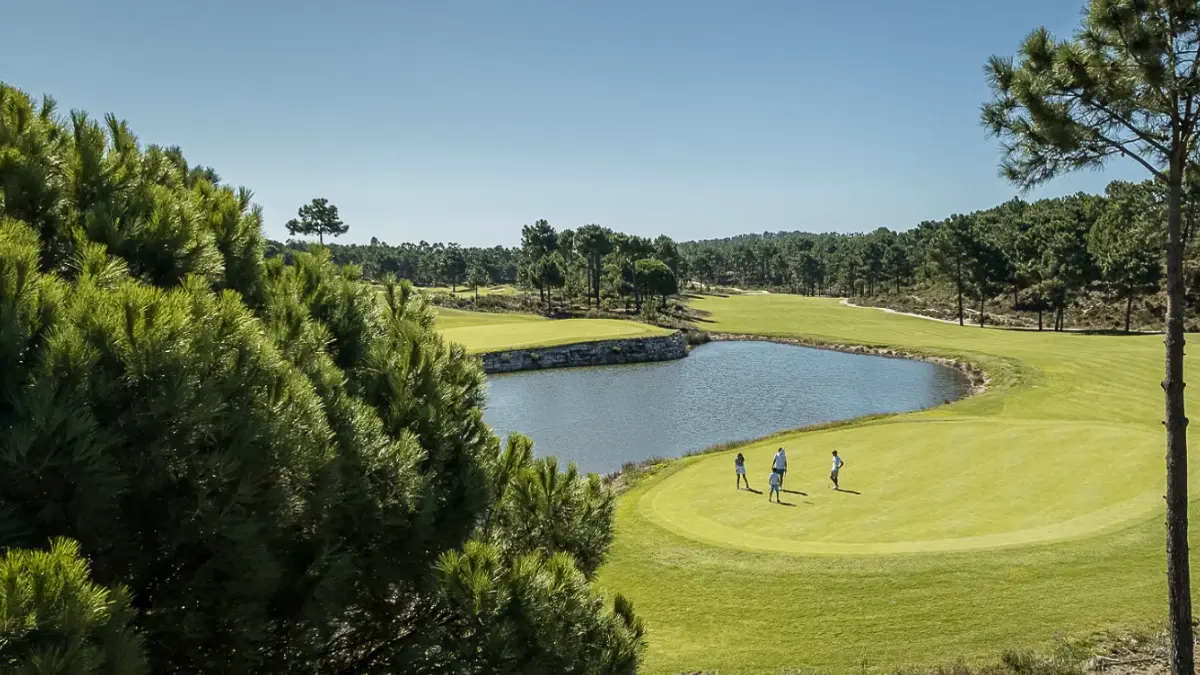
Vidago Palace Golf Course

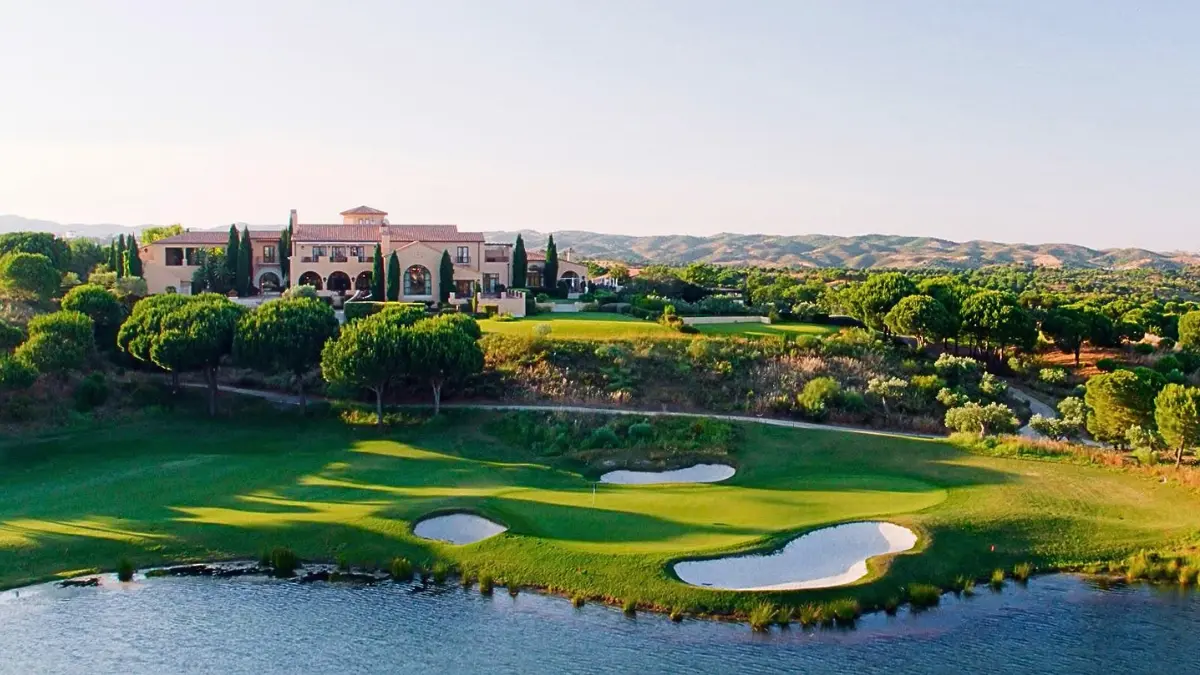
Vidago Palace is no ordinary backdrop for a national circuit event. Originally laid out by Scottish architect Mackenzie Ross in 1936 as a nine-hole course, it was reimagined by Cameron & Powell and reopened as a full par-72 championship layout in 2010. Set in the Oura Valley in northern Portugal — roughly an hour south of Chaves, near the Spanish border — the course winds through a centenary park before opening out into dramatic hillside terrain. The 17th, a par five played from the highest to the lowest point on the course, is the signature hole and one of the more theatrical finishes in Portuguese golf. The clubhouse was designed by architect Álvaro Siza Vieira. (Vidago Palace)

A Season Taking Shape

Three events into the 2026 AQUAPOR Circuit, and Pereira already has two wins — a fact the rest of the field will be tracking with increasing attention. The circuit opened in January at Morgado do Reguengo, where Amélia Gabin (ADCQL) and José Miguel Franco de Sousa (Estoril Golf Club) took the honours. March brought Quinta do Perú and a first circuit win for Pereira alongside Francisca Salgado (Vale de Janelas). Vidago makes it a double for the Aroeira golfer in 2026. Five champions across three events; five different stories.

What’s Next on the Circuit

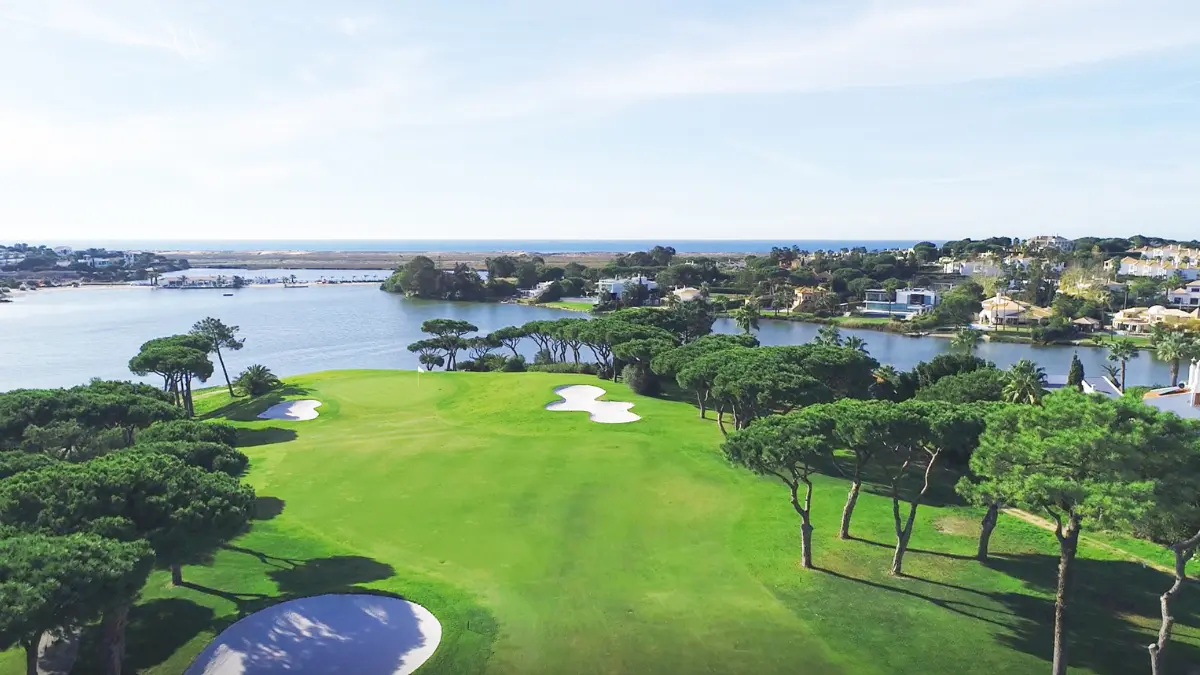
The AQUAPOR Circuit resumes at Palmares on 18–19 July — a course that trades northern mountain drama for Algarve coastline, with the beach at Meia Praia stretching out below its fairways. Estela follows in October, and the season concludes at Belas Clube de Campo in November.

If the circuit’s next stop has you thinking about a Portugal golf trip of your own, explore the Algarve’s finest courses — including Palmares — with Tee Times.

From Campus to Fairway: Portugal’s Universities Make Their Golf Debut

Golf in Portugal has always had one eye on the future. From junior development circuits to the national training centre at Jamor, the FPG has spent years building the infrastructure of a sport with serious long-term ambition. The first University Team Golf Tournament, held at Jamor in 2026, is the latest piece of that puzzle — and arguably one of the most significant.

A New Competition on Home Ground

The Centro Nacional de Formação de Golfe do Jamor is state property, integrated within the national sports complex and managed by the FPG under a 25-year agreement. Its nine-hole course, inaugurated in 2013, has since been recognised with GEO Certified® status for its sustainability credentials. Located 20 minutes from central Lisbon, it made a fitting home for a tournament with growth at its heart.

Jamor 9 Hole Golf Course

The FPG organised the event with a stated goal: to bring golf closer to the university community. The mixed-team format — students from across Portugal’s higher education institutions competing together — added a dimension that pure strokeplay rarely achieves. It was competitive and sociable, which, when you’re trying to grow a sport inside a campus culture, is more or less the point.

Universidade de Lisboa Take the Title

The inaugural title went to Universidade de Lisboa. Their team — captained by Eduardo Bianchi and comprising Inês Simão Gonçalves, Mafalda Soares, Clement Guertener, Enzo Blanc, Tomás Massena, William Bao, Francisco Jorge, and Dinis Isidro — played with enough composure to claim a clear victory on the day. IP + Iscte – Instituto Universitário de Lisboa finished second, with Universidade Católica Portuguesa in third. (Federação Portuguesa de Golfe)

Competitors First University Tournament Portugal

Nine teams, one course, and a first edition that delivered on both atmosphere and competition. The FPG’s instinct to stage it as a team event — rather than an individual ranking exercise — was well-judged. Universities rally around collective identity. Golf in Portugal now has a platform to benefit from that.

Portugal in the Wider Picture

This tournament doesn’t exist in isolation. Portugal already features as a qualifying venue in the R&A Student Tour Series — an international circuit designed to provide elite student golfers outside the USA and Mexico with high-performance competition. The Series was launched in 2019, and the R&A invests close to £500,000 annually in student and university golf through its Foundation Scholars programme. (The R&A)

What the FPG has done here is to complement that elite pathway with something broader — a domestic platform for students who love the game, regardless of whether they’re chasing amateur titles. The Portugal golf courses that host the international circuit are a different world from Jamor’s nine holes. But the pipeline runs in one direction.

Portugal’s golf ecosystem has momentum on multiple fronts. The Algarve remains one of Europe’s most established golf holiday destinations, the FPG’s youth development circuits have been expanding their reach, and the Portugal golf competitions calendar grows more varied each year. The first University Team Golf Tournament isn’t just a feel-good footnote to all of that. It’s evidence that the federation is thinking carefully about where the next generation of Portuguese golfers comes from — and making sure there’s a competition waiting for them when they arrive.

Golf South of the Tagus: The Lisbon Region’s Most Underrated Course Cluster

Dunas, Torre, Montado, Aroeira, Quinta do Peru, Troia — six reasons to cross the river.

Most golfers heading to Lisbon look west towards Cascais and Sintra, or north towards the Silver Coast. The courses south of the Tagus rarely make the shortlist. That is a mistake worth correcting.

Dunas da Comporta: The Best Golf Course in the World

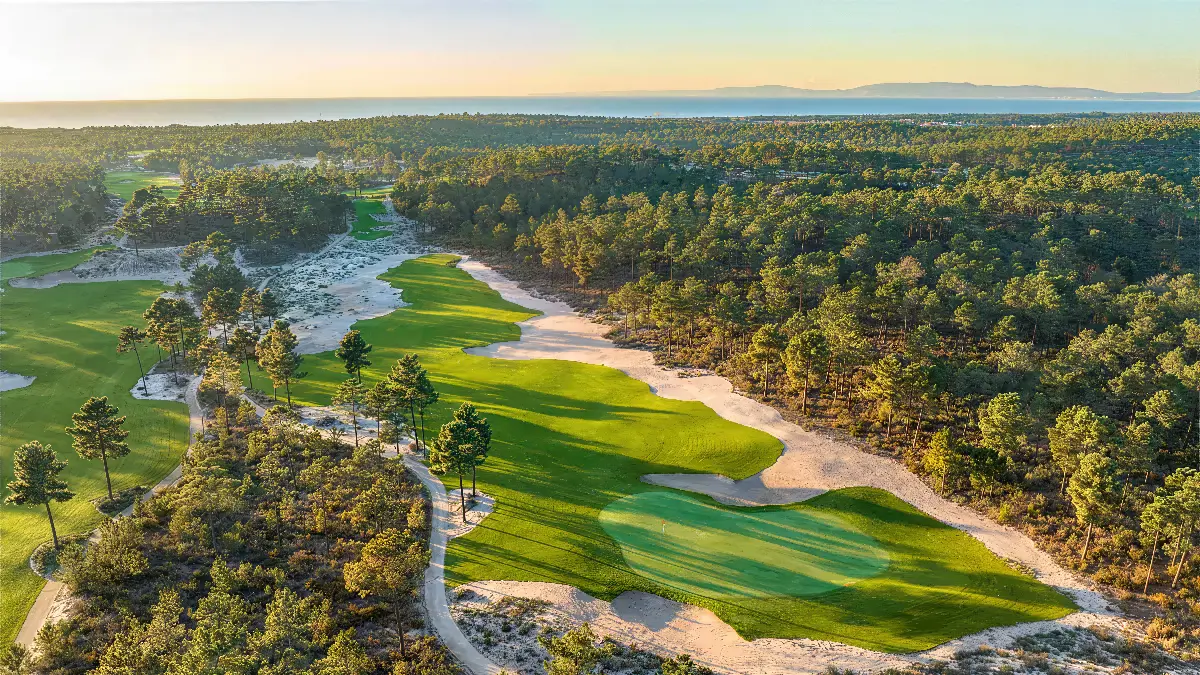
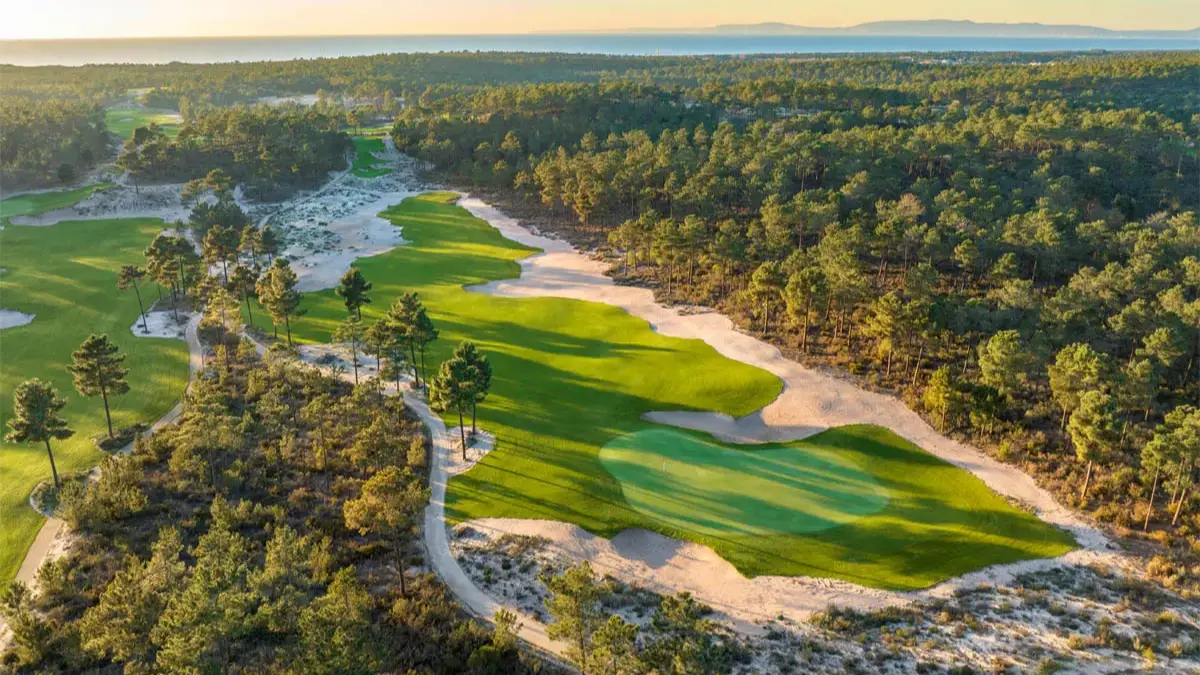
An hour south of Lisbon, on the edge of the Sado Estuary, Dunas Golf Course at Terras da Comporta has done something no Portuguese course has done before. Designed by David McLay-Kidd — the Scottish architect behind Bandon Dunes — and opened in October 2023, the par-71 layout across 84 hectares of natural sandy terrain is the closest thing to a links course in Portugal.
South Lisbon Comporta Golf CourseThe awards came quickly and have not stopped. Dunas was named World’s Best New Golf Course and Europe’s Best New Golf Course at the 2023 World Golf Awards. In 2024, it collected three more — World’s Best Golf Course, Europe’s Best Golf Course, and Europe’s Best Eco-Friendly Golf Facility. It retained the Europe’s Best Golf Course title in 2025. It holds the number one ranking in Portugal on Top100GolfCourses.com and sits at number six in Continental Europe on the same list.

All of this within two years of opening. No course in Europe has made an entrance like it.

Torre: Sergio Garcia’s First Signature Course

Five minutes from Dunas, the Torre Golf Course opened in 2025 — the first complete design by 2017 Masters champion Sergio Garcia. The par-72 layout stretches to 6,575 metres from the back tees and draws heavily on Garcia’s favourite course, Valderrama. Small greens, tight fairways, risk-and-reward holes and short par-threes with real character.
South Lisbon Torre Golf CourseTogether, Dunas and Torre make Terras da Comporta a genuine 36-hole destination — two courses of Continental European Top 100 calibre, side by side, an hour from Lisbon. That combination did not exist two years ago.

Montado: Cork Oaks, Muscatel Vines, and an Island Green

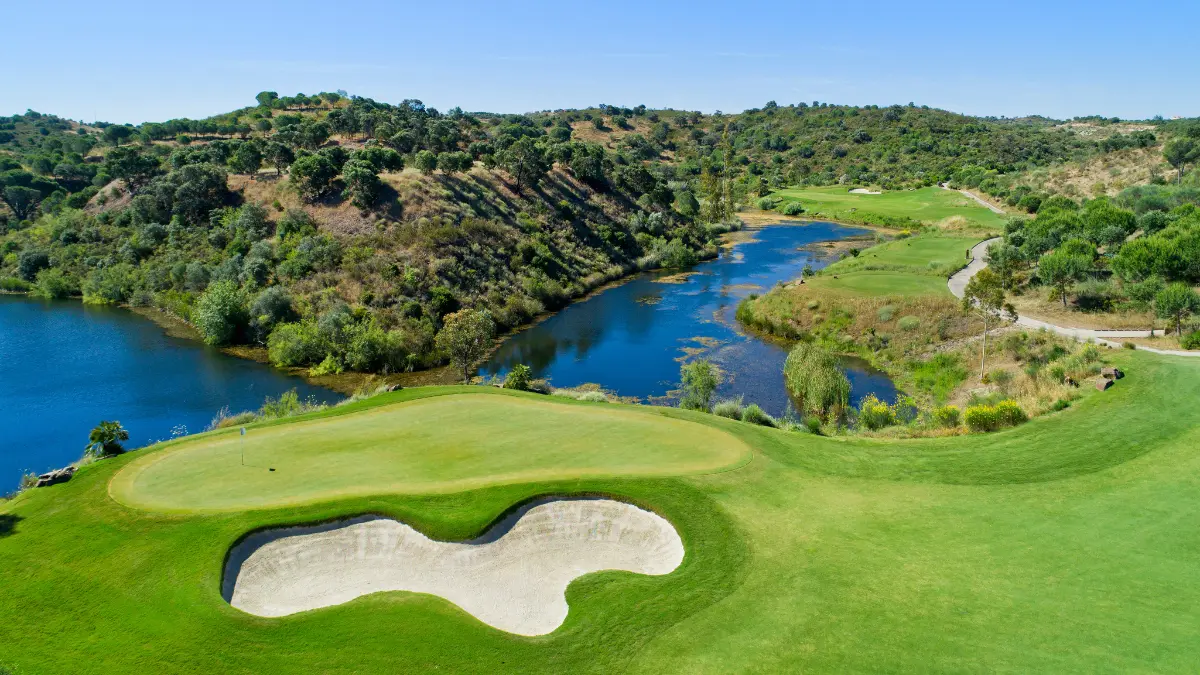
Montado Golf Course lies on Portugal’s Blue Coast, around an hour south of Lisbon, close to the coastal town of Setúbal and the historic village of Palmela. The course unfolds beneath oak, olive, chestnut and pine trees, with creeks, natural lakes and muscatel vineyards winding around the layout — a setting that feels genuinely apart from the city, despite the short drive.
South Lisbon Montado Golf CourseThe signature hole is the 18th, where the green sits on an island and the round ends exactly as it should: with something at stake.

The course is in excellent condition and golfers are well looked after. For accommodation, the Crowne Plaza Caparica Lisbon — a DHM property on the Costa de Caparica — provides an excellent base, with attractive rates available for golf guests.

Aroeira: Two Courses, One Forest, One Very Good Reason to Stay Longer

Tucked in a pine forest adjacent to the coastal town of Caparica and just 15 miles from Lisbon, Aroeira features two golf courses. Frank Pennink’s Aroeira Pines Classic, which opened in 1973, was dubbed the “Wentworth of Lisbon” by the British press.
South Lisbon Aroeiras Golf CourseThe second course, designed by Donald Steel, occupies more uneven terrain with more water in play and is generally the tougher of the two. Aroeira is now part of the PGA portfolio — under new ownership that has invested considerably in both course conditions and service standards. Between them, the two courses offer enough variety to fill several days without moving your bags — and they are in better shape than ever.

Quinta do Peru: Quietly Exceptional

Set against the Arrábida Hills, Quinta do Peru was considered one of the top 10 golf courses in Europe by European Golf magazine and has hosted rounds of the European Challenge Tour. It sits between Sesimbra and Setúbal, routed across a high undulating plateau through more than 300 acres of pine forest, with views across the treetops and the Arrábida mountains as a backdrop.
South Lisbon Quinta do Peru Golf CourseIt earns its reputation quietly. The golfers who have played it tend to take care of the rest.

Troia: The One That Requires a Ferry and Rewards the Effort

Designed by Robert Trent Jones Senior and opened in 1980, Troia sits on a peninsula reached by a short ferry crossing from Setúbal, wedged between the Atlantic Ocean, the Sado Estuary and the Serra da Arrábida. When the Portuguese Open came to Troia in 1983, Sam Torrance was the only player to beat par for the championship.
South Lisbon Troia Golf CourseLike Aroeira, the course has since come under the PGA umbrella, with new ownership investing significantly in playing conditions and the wider visitor experience. The ferry crossing adds ten minutes and a considerable amount of anticipation.

From an award-winning course ranked the best in the world to a clifftop plateau with views across the Arrábida, the south of the Tagus offers some of the finest and most varied golf in Portugal.

Tee Times covers the full range of Lisbon golf holidays — courses, hotels, and tee times across all of the above.